Many NECO candidates put in long hours of study, yet the results do not reflect their effort. This can be frustrating, especially when you feel like you have “read everything.”
The problem is often not hard work. It is how that work is done.
Some students follow advice that does not work. Others repeat habits that quietly reduce their chances of success. Without realizing it, they fall into patterns that lead to poor performance.
This guide explains the common mistakes students make when studying for NECO, why they happen, and how to avoid them. If you want to pass NECO on your first attempt, these insights will help you prepare with clarity and confidence.
Why Understanding NECO Study Mistakes Matters
The Cost of Poor Study Habits
Poor study habits can affect even intelligent students. The results often include:
- Low grades despite serious effort
- Difficulty remembering what was read
- Anxiety before and during exams
- Lack of confidence in answering questions
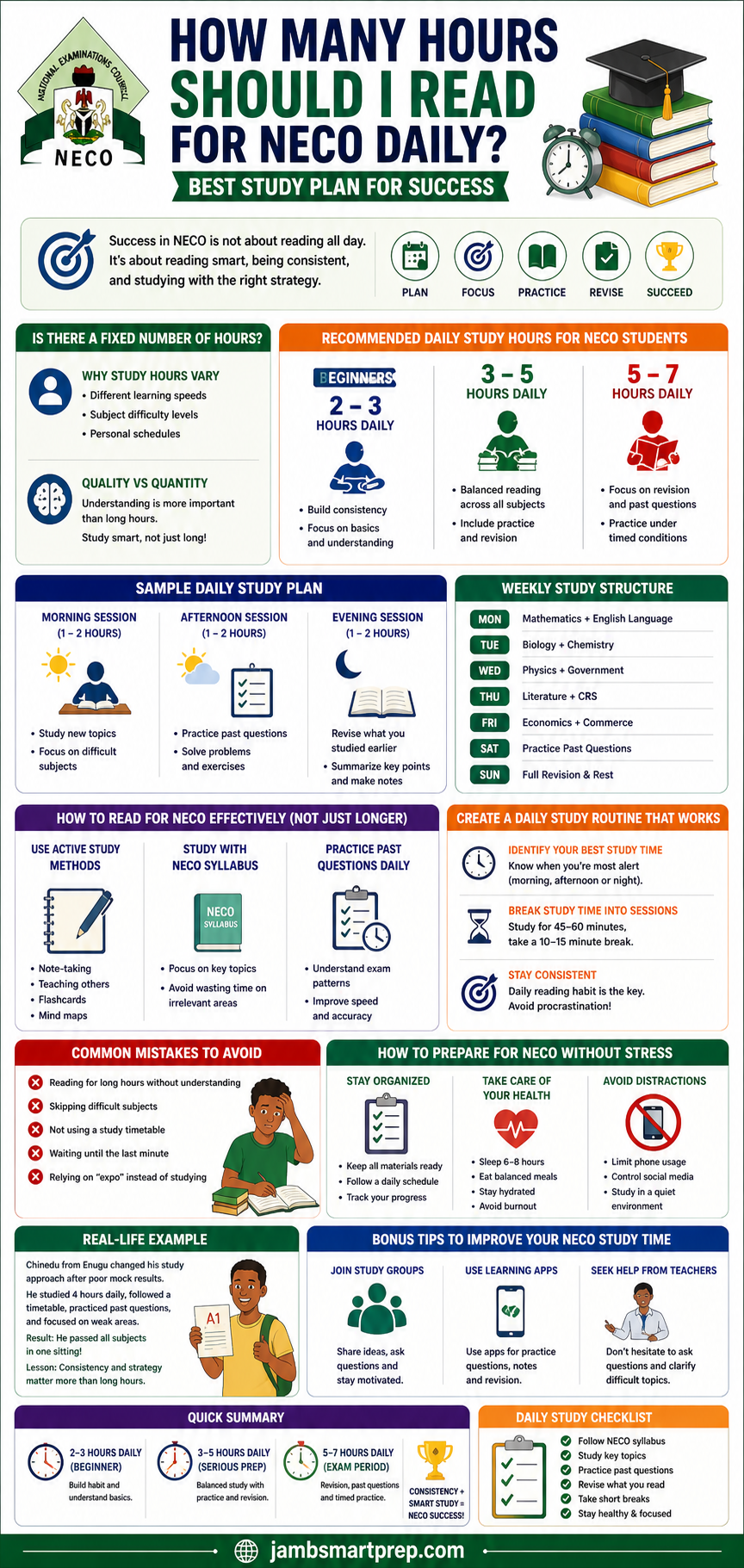
Also read: How Many Hours Should I Read for NECO Daily? (Best Study Plan for Success)
Many students blame the exam when the real issue lies in preparation.
Why Many Students Repeat the Same Mistakes
There are a few common reasons:
- Following advice from friends who are also struggling
- Lack of proper academic guidance
- Overconfidence in last-minute reading
- Ignoring feedback from teachers
Understanding these patterns is the first step toward improvement.
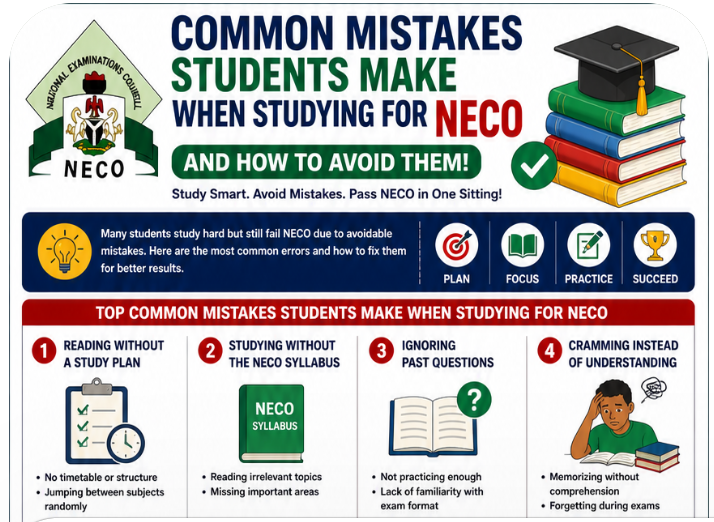
Top Common Mistakes Students Make When Studying for NECO
1. Reading Without a Study Plan
One of the biggest NECO study mistakes is reading without direction.
Many students:
- Open any subject at random
- Study based on mood
- Fail to track progress
This approach leads to incomplete coverage of the syllabus.
Fix:
Create a simple study timetable. Assign subjects to specific days and time slots. Even a basic plan brings structure to your preparation.
2. Studying Without the NECO Syllabus
Some students read textbooks without checking the official syllabus.
This leads to:
- Spending time on topics that may not appear
- Missing key areas that are likely to be tested
Fix:
Use the NECO syllabus as your roadmap. It shows exactly what you need to focus on.
3. Ignoring Past Questions
Another common mistake is avoiding past questions.
Students who skip them often:
- Do not understand exam patterns
- Struggle with time management
- Feel unprepared during the exam
Fix:
Practice past questions regularly. Many NECO questions are repeated or follow similar formats.
4. Cramming Instead of Understanding
Cramming may seem effective in the short term, but it rarely works in exams.
Students who cram:
- Forget quickly
- Struggle with application questions
- Panic when questions are slightly different
Fix:
Focus on understanding concepts. Ask yourself, “Do I truly understand this topic?” rather than “Can I memorize it?”
5. Skipping Difficult Subjects or Topics
It is natural to avoid what feels difficult. However, this can be costly.
Students who skip topics often:
- Leave gaps in their knowledge
- Lose easy marks in the exam
Fix:
Start with your weakest subjects. Break difficult topics into smaller parts and study them gradually.
6. Reading for Long Hours Without Focus
Some students believe success comes from reading all day.
In reality, they may:
- Study with distractions
- Lose concentration quickly
- Retain very little
Fix:
Use focused study sessions:
- Study for 45–60 minutes
- Take short breaks
- Remove distractions like phones
7. Lack of Consistency
Reading only when you feel motivated is a common mistake.
This leads to:
- Irregular study habits
- Poor retention
- Panic before exams
Fix:
Develop a daily study routine. Even 2–3 hours of consistent reading can produce better results than occasional long sessions.
8. Overdependence on “Expo” or Malpractice
Some students rely on shortcuts instead of preparation.
This approach is risky because:
- It can lead to disqualification
- It reduces confidence
- It leaves you unprepared for future exams
Fix:
Prepare honestly. Students who rely on proper study methods perform better and feel more confident.
How to Avoid These NECO Study Mistakes
Create a Structured Study Plan
A good study plan should include:
- Daily reading schedule
- Weekly subject rotation
- Time for revision
Example:
- Morning: New topics
- Afternoon: Practice questions
- Evening: Revision
Use Effective Study Techniques
To improve how you read:
- Take notes while studying
- Summarize topics in your own words
- Teach someone else what you learned
These methods improve understanding and memory.
Practice Regularly
Practice builds confidence.
- Solve past questions
- Attempt mock tests
- Time yourself during practice
This helps you prepare for real exam conditions.
How to Read for NECO Effectively
Study Smart, Not Just Hard
Reading smart means:
- Focusing on key topics
- Understanding concepts
- Avoiding passive reading
Break Study Into Sessions
Long study hours can reduce productivity.
Instead:
- Study in 45–60 minute blocks
- Take 10–15 minute breaks
- Repeat
Identify Your Best Study Time
Some students perform better in the morning. Others prefer night reading.
Find what works best for you and use that time for difficult subjects.
Real-Life Example of a Student Who Improved
Amina, a student in Lagos, struggled during her NECO mock exams. She studied regularly but had no clear plan.
Her initial mistakes included:
- Reading randomly
- Avoiding Mathematics
- Not practicing past questions
After seeking advice from her teacher, she made changes:
- Created a daily timetable
- Focused on weak subjects first
- Practiced past questions every evening
Within a few weeks, her performance improved.
In the final NECO exam, she passed all subjects in one sitting.
Lesson:
Avoiding common mistakes can completely change your results.
Bonus NECO Preparation Tips
Here are extra tips that can boost your performance:
- Join a study group to stay motivated
- Ask teachers questions when confused
- Use learning apps for practice
- Revise topics weekly
Small improvements in your routine can lead to better outcomes.
Common NECO Study Mistakes to Avoid
NECO Study Mistakes Checklist
Mistakes to Avoid:
- No study timetable
- Ignoring syllabus
- Skipping past questions
- Cramming
- Avoiding difficult subjects
- Inconsistent reading
What to Do Instead:
- Follow a structured study plan
- Use NECO syllabus as a guide
- Practice questions daily
- Focus on understanding concepts
- Stay consistent
Frequently Asked Questions (FAQs)
What are the most common mistakes students make in NECO preparation?
The most common mistakes include:
- Reading without a plan
- Ignoring the syllabus
- Not practicing past questions
- Cramming instead of understanding
- Being inconsistent
Why do students fail NECO despite studying hard?
Many students fail because they study incorrectly. Reading without focus, skipping key topics, and poor time management are major reasons.
How can I avoid mistakes while preparing for NECO?
You can avoid mistakes by:
- Creating a study timetable
- Using the syllabus
- Practicing past questions
- Staying consistent
Is it possible to pass NECO without making these mistakes?
Yes. Students who follow proper study methods and avoid common errors often pass NECO in one sitting.
What is the best way to study for NECO effectively?
The best approach includes:
- Understanding concepts
- Practicing regularly
- Revising consistently
- Studying in focused sessions
How can I prepare for NECO without stress?
- Start early
- Follow a simple timetable
- Avoid last-minute reading
- Take breaks and rest
What should I not do when studying for NECO?
Avoid:
- Reading without understanding
- Skipping difficult subjects
- Relying on malpractice
- Studying without a plan
Conclusion
Making mistakes during NECO preparation is common, but repeating them can affect your results.
The good news is that these mistakes are easy to correct once you understand them.
Focus on building a simple study routine. Use the syllabus, practice past questions, and stay consistent. These steps may seem basic, but they are proven to work.
If you are preparing for NECO, start making these changes today.
You can also explore related guides on study timetables, past questions, and exam strategies to improve your preparation further.
If you have faced any challenges while studying, share your experience. Your story might help another student prepare better.