Online shopping in Nigeria has changed a lot in recent years. Many small businesses now use Twitter to promote products and connect with buyers directly.
While this has made buying easier, it has also created a serious problem. Fake vendors are everywhere. Every day, people lose money to accounts that disappear immediately after payment.
If you have ever felt unsure about a seller or worried about being scammed, you are not alone. Many Nigerian students and young buyers face the same issue, especially when trying to buy gadgets, clothes, or even academic materials online.
This guide will show you exactly how to avoid fake vendors on Twitter (X) in Nigeria. You will learn how scammers operate, how to spot warning signs, and how to protect your money before making any payment.
Why Fake Vendors Are Increasing on Twitter (X) in Nigeria
Growth of Social Commerce on Twitter
Twitter has become more than a place for news and conversations. It is now a marketplace.
Many Nigerian vendors sell:
- Phones and gadgets
- Fashion items
- Sneakers and accessories
- Digital products like past questions
The advantage is simple. A seller can reach thousands of people within minutes.
Why Scammers Prefer Twitter (X)
Scammers take advantage of how easy it is to operate on Twitter.
- Anyone can create an account in minutes
- Profiles can remain anonymous
- Communication is fast and direct
Unlike traditional e-commerce platforms, there is little verification before someone starts selling.
Real-Life Scenario
A university student in Lagos saw a laptop advertised at a very low price on Twitter. The seller had convincing screenshots and positive comments.
After payment, the vendor stopped replying. The account was later deleted.
Also read: How to Avoid Fake Vendors on WhatsApp in Nigeria (Complete Safety Guide)
This is a common example of a Twitter scam in Nigeria.
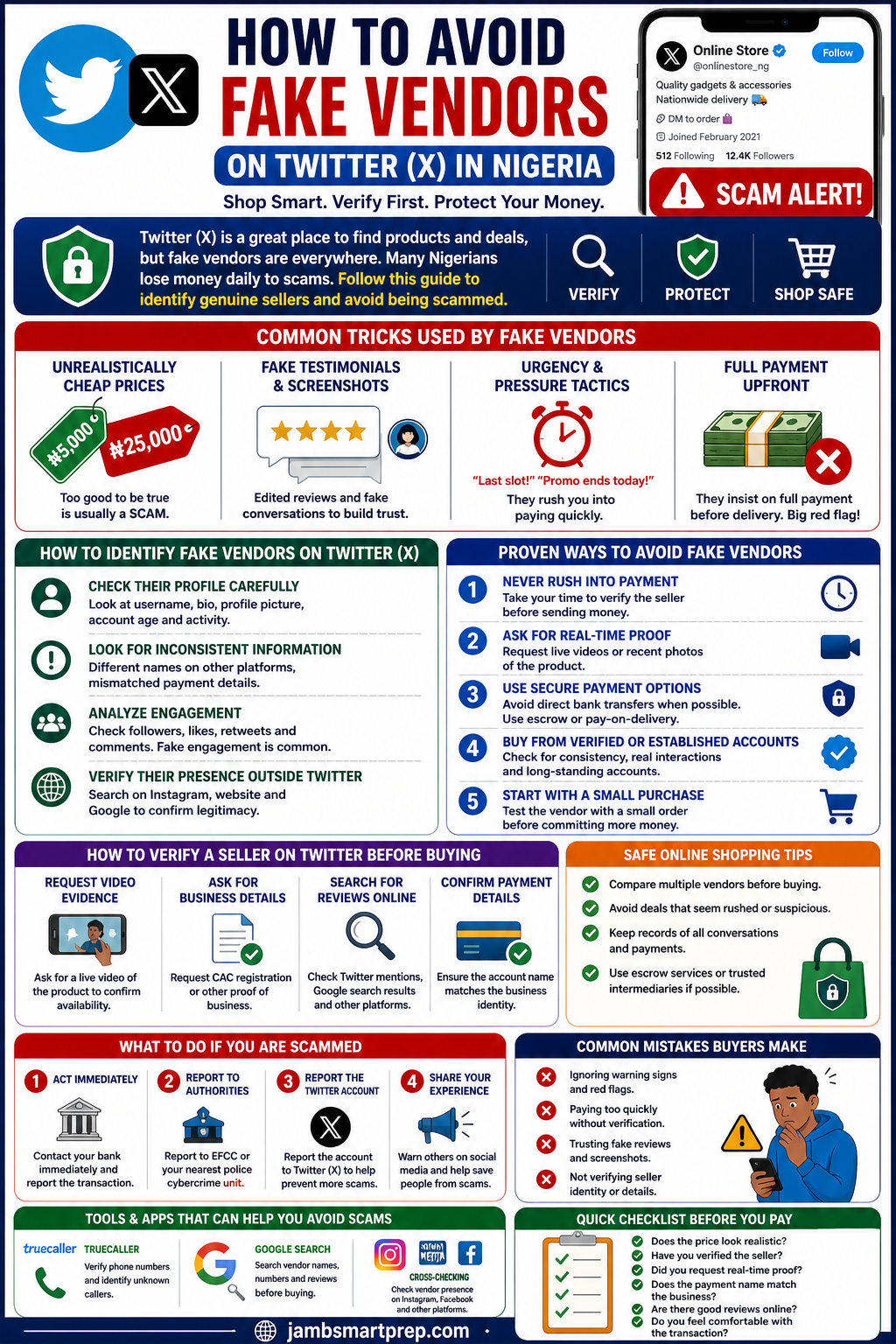
Common Tricks Used by Fake Vendors on Twitter
Unrealistically Cheap Prices
One of the biggest warning signs.
If a product is far cheaper than the market price, there is a high chance it is a scam.
Fake Testimonials and Screenshots
Scammers often post:
- Edited chat screenshots
- Fake delivery confirmations
- Stolen reviews from other pages
These are designed to build trust quickly.
Urgency and Pressure Tactics
You may see messages like:
- “Last slot available”
- “Promo ends today”
This is meant to rush you into making a quick decision without verification.
Request for Full Payment Upfront
Most fake vendors insist on:
- Full payment before delivery
- No option for inspection or pay-on-delivery
This is a major red flag.
How to Identify Fake Vendors on Twitter (X) in Nigeria
Check Their Profile Carefully
Before you trust any seller, look at their profile.
- Does the account have a proper business name?
- Is the profile picture original or copied?
- How long has the account existed?
New accounts with little activity should raise concern.
Look for Inconsistent Information
Fake vendors often make mistakes.
- Different names across platforms
- Payment account name does not match business name
These inconsistencies are warning signs.
Analyze Engagement
A large follower count does not mean the account is genuine.
Check:
- Are comments real or repetitive?
- Do people ask questions without replies?
Fake engagement is common.
Verify Their Presence Outside Twitter
A genuine business usually exists beyond one platform.
Search for the vendor:
- On Google
- On Instagram
- On other marketplaces
If nothing shows up, be careful.
Proven Ways to Avoid Fake Vendors on Twitter
1. Never Rush Into Payment
Take your time.
Even if the offer looks attractive, pause and verify before sending money.
2. Ask for Real-Time Proof
Request:
- A current video of the product
- A live demonstration
This helps confirm that the seller actually has the item.
3. Use Secure Payment Options
Avoid direct transfers when possible.
Safer options include:
- Payment on delivery
- Escrow services
4. Buy From Verified or Established Accounts
Look for:
- Consistent posting history
- Real customer interactions
- Long-standing accounts
These are signs of a reliable vendor.
5. Start With a Small Purchase
If you are unsure, test the seller first.
- Buy a small item
- Confirm delivery before placing a bigger order
How to Verify a Seller on Twitter Before Buying
Request Video Evidence
Ask the seller to show:
- The product
- Your name written beside it
This reduces the risk of using stolen images.
Ask for Business Details
A serious vendor should provide:
- Business name
- Registration details (if available)
Search for Reviews Online
Type the vendor’s name into Google.
Look for:
- Complaints
- Positive reviews
- Mentions on forums
Confirm Payment Details
Check if:
- The bank account name matches the business
- The details are consistent across platforms
Safe Online Shopping Tips in Nigeria
To stay safe while shopping online:
- Compare prices from multiple vendors
- Avoid rushed decisions
- Keep records of chats and receipts
- Use trusted intermediaries where possible
These simple steps can save you from major losses.
What to Do If You Are Scammed on Twitter
Act Immediately
Contact your bank as soon as possible.
In some cases, transactions can be traced or reversed.
Report to Authorities
You can report the case to:
- EFCC
- Police cybercrime units
Providing evidence increases your chances of action.
Report the Twitter Account
Use Twitter’s reporting feature to flag the account.
This helps prevent others from being scammed.
Share Your Experience
Post your experience online.
It can help warn others and expose the scammer.
Real-Life Example of Avoiding a Twitter Scam
A student in Abuja wanted to buy a smartphone from a Twitter vendor.
Instead of paying immediately, he:
- Asked for a live video
- Searched the vendor’s name online
- Requested a smaller test order
The seller avoided these requests.
He decided not to proceed. Later, he found complaints about the same vendor.
That decision saved him from losing money.
Common Mistakes Buyers Make on Twitter (X)
Many scams happen because buyers ignore warning signs.
- Paying too quickly
- Trusting fake testimonials
- Ignoring inconsistencies
- Failing to verify the seller
Avoiding these mistakes can protect you.
Tools and Apps That Can Help You Avoid Scams
Some tools can help you verify vendors.
- Truecaller for checking phone numbers
- Google search for background checks
- Social media cross-checking
Using these tools adds an extra layer of safety.
How to Avoid Fake Vendors on Twitter (X) in Nigeria
Quick Safety Checklist
Top Warning Signs:
- Extremely low prices
- Urgent payment requests
- No verifiable identity
Before You Pay:
- ✔ Verify seller details
- ✔ Request video proof
- ✔ Check reviews online
- ✔ Confirm payment name
Safe Buying Tips:
- Start small
- Avoid rushed deals
- Use secure payment options
Golden Rule:
If it feels suspicious, pause and verify.
Frequently Asked Questions (FAQs)
How can I know if a Twitter vendor is legit in Nigeria?
Check their account history, verify their identity, search for reviews, and confirm their payment details before buying.
What are the signs of a fake vendor on Twitter?
Common signs include low prices, fake testimonials, urgent payment requests, and inconsistent information.
Can I recover money lost to a Twitter scam?
Recovery is not guaranteed, but reporting quickly to your bank and authorities increases your chances.
Is it safe to buy from Twitter vendors?
Yes, but only if you verify the seller properly and follow safe online shopping practices.
What is the safest way to pay online in Nigeria?
Use payment-on-delivery options or trusted intermediaries whenever possible.
How can I avoid being scammed on Twitter in Nigeria?
Take your time to verify vendors, avoid rushed decisions, and never send money without proper confirmation.
Conclusion
Online shopping on Twitter can be convenient, but it requires caution.
Fake vendors depend on speed and trust. Once you slow down and verify properly, their tricks become easier to spot.
If you follow the steps in this guide, you can protect yourself and shop with confidence.
Before making your next purchase, take a moment to review the checklist above. It could save you from losing money.
If you found this guide helpful, consider sharing it with friends or classmates. You can also explore related safety tips on avoiding scams across other platforms.