Online shopping in Nigeria has changed the way people buy almost everything. From clothes and gadgets to food and school materials, many transactions now happen directly on WhatsApp.
But there is a problem.
Every day, students and young professionals lose money to fake vendors on WhatsApp. You send payment, wait for delivery, and nothing arrives. The seller disappears, blocks you, or stops replying.
It is frustrating. It is also avoidable.
If you have ever wondered how to avoid fake vendors on WhatsApp in Nigeria, this guide will walk you through it step by step. You will learn how to spot warning signs, verify sellers, and protect yourself before making any payment.
Why Fake Vendors Are Increasing on WhatsApp in Nigeria
The Growth of Online Shopping in Nigeria
Online shopping is no longer limited to big platforms. Many small businesses now operate through WhatsApp.
Why?
- It is easy to set up
- No need for a physical shop
- Direct communication with customers
- Faster transactions
For students, especially those preparing for exams like JAMB or WAEC, it is common to buy textbooks, past questions, and gadgets through WhatsApp vendors.
Also read: How to Avoid Fake Vendors on Instagram in Nigeria
This convenience has created opportunity. It has also created risk.
Why Scammers Prefer WhatsApp
WhatsApp has become a common space for online shopping scams in Nigeria for a few reasons:
- Anyone can create an account within minutes
- No strict identity verification
- Easy to change numbers after scamming victims
- Private conversations make tracking difficult
This makes it attractive for fraudsters who want quick money without being traced.
Real-Life Scenario
A university applicant in Lagos saw an advert for cheap WAEC past questions on WhatsApp. The vendor had screenshots of satisfied customers and claimed limited stock.
He paid immediately.
After payment, the vendor stopped responding. The number later became unreachable.
This story is not rare. It happens daily across Nigeria.
Common Tricks Used by Fake WhatsApp Vendors
Understanding how scammers operate is the first step to avoiding them.
Unrealistically Cheap Prices
If a product is far cheaper than the market price, be careful.
Scammers use low prices to attract quick buyers.
Example:
- A textbook selling for ₦10,000 offered at ₦3,000
This often pushes buyers to act without thinking.
Fake Testimonials and Screenshots
Many fake vendors post:
- Edited chat screenshots
- Fake bank alerts
- Stolen customer reviews
These are designed to create trust quickly.
Pressure Tactics
Scammers often rush buyers with messages like:
- “Last two items left”
- “Offer ends today”
- “Others are already paying”
This creates urgency and reduces your time to verify.
Request for Full Payment Upfront
A major red flag is when a vendor insists on:
- Full payment before delivery
- No alternative payment method
While some genuine vendors request payment first, scammers rely heavily on this.
How to Identify Fake Vendors on WhatsApp in Nigeria
If you want to know how to identify fake online vendors, pay attention to these details.
Check Their Profile Details
Look closely at:
- Display picture
- Business name
- Status updates
A serious vendor usually maintains a consistent business identity.
Look for Inconsistent Information
Be careful if:
- The account name differs from the bank account name
- The business name changes frequently
- Contact details seem unclear
Consistency builds trust.
Verify Their Phone Number
Before paying, search the number using tools like Truecaller.
You can also:
- Google the number
- Check if others have reported it
If the number has scam reports, avoid it immediately.
Review Their Social Media Presence
A genuine business often has:
- An Instagram page
- A Facebook page
- Customer engagement
No online presence is a warning sign.
Proven Ways to Avoid Fake Vendors on WhatsApp
If you are serious about how to avoid being scammed when buying online in Nigeria, follow these steps carefully.
1. Never Rush Into Payment
Take your time.
Even if the offer looks attractive, pause and verify.
2. Ask for More Proof
Request:
- Recent product videos
- Live pictures with your name written on paper
- Real-time updates
Scammers often avoid providing live proof.
3. Use Trusted Payment Methods
Avoid direct bank transfers when unsure.
If possible:
- Use payment on delivery
- Use trusted platforms
4. Choose Vendors With Physical Locations
A vendor with a shop or office is easier to verify.
Ask for:
- Shop address
- Landmark location
5. Start With a Small Order
Before making a large purchase:
- Test with a smaller order
This reduces risk.
How to Verify a Seller on WhatsApp Before Buying
If you are asking how to verify a seller on WhatsApp, here are practical steps.
Request a Video Call or Live Proof
Ask the seller to:
- Show the product in real time
- Confirm availability
Most scammers will avoid this.
Ask for Business Registration Details
In Nigeria, many legitimate businesses are registered with the Corporate Affairs Commission.
Ask for:
- CAC registration details
While not all small vendors have this, it adds credibility.
Check Online Reviews
Search the vendor on:
Look for complaints or warnings.
Confirm Bank Account Name
The account name should match the business name.
If it does not, ask questions before proceeding.
Safe Online Shopping Tips in Nigeria
These safe online shopping tips in Nigeria can help you avoid problems.
- Compare multiple vendors before buying
- Avoid deals that feel rushed
- Keep screenshots of chats and receipts
- Avoid sending money to personal accounts without verification
- Use escrow services when available
What to Do If You Are Scammed by a WhatsApp Vendor
If you are already a victim, act quickly.
Act Immediately
Contact your bank and:
- Report the transaction
- Request a reversal if possible
Report to Authorities
You can report to:
- The Economic and Financial Crimes Commission (EFCC)
- The nearest police cybercrime unit
Report the WhatsApp Account
Report the number directly within WhatsApp.
This helps reduce further scams.
Share Your Experience
Post your experience online to warn others.
Many scams are prevented through awareness.
Real-Life Example of Avoiding a WhatsApp Scam
A student preparing for JAMB needed a recommended textbook. He found a vendor offering a lower price than usual.
Instead of paying immediately, he:
- Searched the phone number online
- Checked social media pages
- Requested a live video of the product
- Compared prices with other vendors
The seller failed to provide proof and stopped responding.
He avoided what could have been a loss.
Common Mistakes Buyers Make When Shopping on WhatsApp
Many scams happen because of simple mistakes.
Ignoring Warning Signs
Red flags are often visible but ignored.
Paying Too Quickly
Rushing into payment increases risk.
Trusting Fake Reviews
Screenshots can be edited easily.
Not Verifying Seller Identity
Skipping verification is one of the biggest mistakes.
Tools and Apps That Can Help You Avoid Scams
You can use simple tools to stay safe.
Useful tools:
- Truecaller for number identification
- Google search for checking vendor reputation
- Social media platforms for verifying business presence
These tools take only a few minutes but can save you money.
How to Avoid Fake Vendors on WhatsApp in Nigeria
Quick Safety Checklist
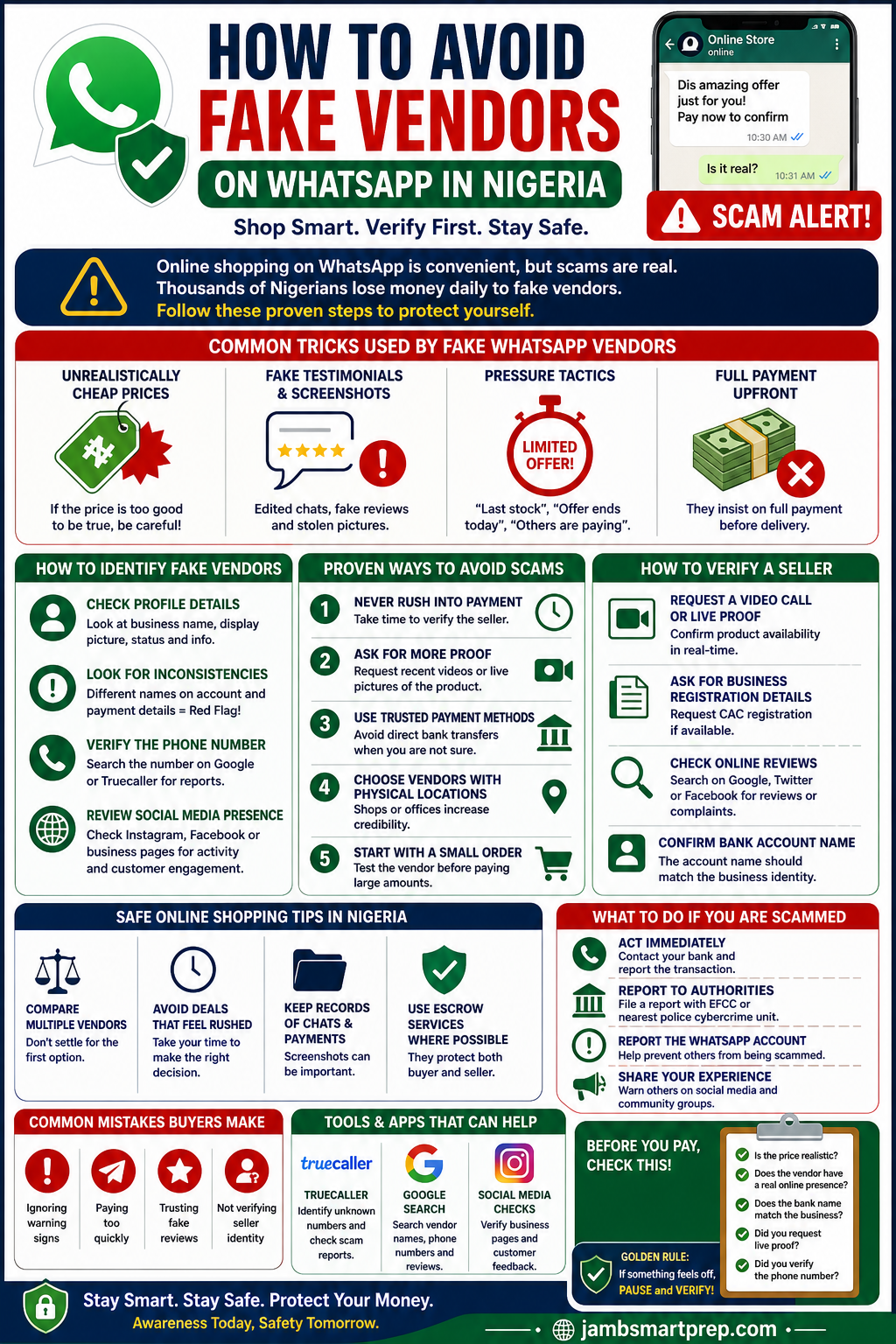
Before You Pay, Check This:
- ✔ Is the price realistic?
- ✔ Does the vendor have a real online presence?
- ✔ Does the bank name match the business?
- ✔ Did you request live proof?
- ✔ Did you verify the phone number?
Top 5 Warning Signs:
- Extremely cheap products
- Pressure to pay immediately
- No video proof
- Inconsistent identity
- No traceable online presence
Golden Rule:
If something feels off, pause and verify.
Frequently Asked Questions (FAQs)
How can I know if a WhatsApp vendor is legit in Nigeria?
Check their profile, verify their number, review their social media presence, and request live proof before making payment.
What are the signs of fake vendors on WhatsApp in Nigeria?
Common signs include low prices, pressure tactics, fake testimonials, and inconsistent account details.
Can I get my money back after being scammed?
It is possible in some cases if you act quickly and report to your bank, but recovery is not guaranteed.
Is it safe to buy from WhatsApp vendors?
Yes, but only when you verify the seller properly and follow safe online shopping practices.
What is the safest way to pay online in Nigeria?
Payment on delivery or using trusted platforms is safer than direct transfers to unknown vendors.
How do I protect myself from online fraud in Nigeria?
Always verify sellers, avoid rushed payments, keep records, and use trusted tools to check identities.
Conclusion
Learning how to avoid fake vendors on WhatsApp in Nigeria is no longer optional. It is a necessary skill for anyone who shops online.
Scams are increasing, but they are also predictable. Most fake vendors follow similar patterns, and once you understand them, you can protect yourself.
Take your time. Verify before paying. Trust your instincts.
If you found this guide helpful, consider sharing it with friends or classmates. You can also explore more resources on safe online practices and student tools that can support your academic journey.
Your safety online starts with awareness and simple, consistent actions.