You find a nice pair of sneakers or a fairly used iPhone online. The price looks good. The page looks clean. You send the money… and that is the last time you hear from the seller.
This has become a common experience for many Nigerians.
With the rise of Instagram shops, WhatsApp vendors, and Facebook sellers, online shopping has grown rapidly. At the same time, scams have increased just as quickly.
So, it is no surprise that many people now ask:
- How do I know if an online vendor is legit in Nigeria?
- How can I avoid fake online sellers?
The truth is simple. Most buyers get scammed not because they are careless, but because they do not know what to look for.
This guide explains how to check if an online vendor is legit in Nigeria, with practical steps you can apply immediately before sending any payment.
Why Online Vendor Verification Is Important
Online shopping has made life easier. You can order clothes, phones, or even school materials from your room.
But convenience comes with risk.
Also read: How to Avoid Getting Scammed on Instagram in Nigeria
The Reality in Nigeria
- Many transactions happen through Instagram, WhatsApp, and Facebook
- Payments are often made before delivery
- There is little protection if the seller disappears
According to industry reports, Nigeria’s e-commerce sector continues to grow, with millions of users shopping online each year. Yet, fraud complaints linked to online sellers are also rising.
Common Risks
- Seller collects payment and disappears
- No delivery after payment
- Fake tracking information
- Blocked communication
Key Insight:
A beautiful Instagram page or WhatsApp display picture does not prove a business is real.
Common Types of Fake Online Vendors in Nigeria
Understanding how scammers operate makes it easier to avoid them.
1. Instagram Boutique Scams
- Attractive product pictures
- No real customers
- Comments often disabled
2. Fake Gadget Sellers
- iPhones or laptops sold far below market price
- Claims of “promo” or “clearance sale”
3. WhatsApp Vendor Scams
- No proper business profile
- Only chat-based interaction
- No traceable identity
4. Impersonation Vendors
- Copy real business pages
- Use stolen photos and reviews
5. Pay-Before-Delivery Fraud
- Insist on full payment upfront
- No proof of past delivery
Also read: How to Verify a Phone Number in Nigeria Before Sending Money
Key Insight:
Most fake online sellers in Nigeria rely on urgency, attractive visuals, and low prices.
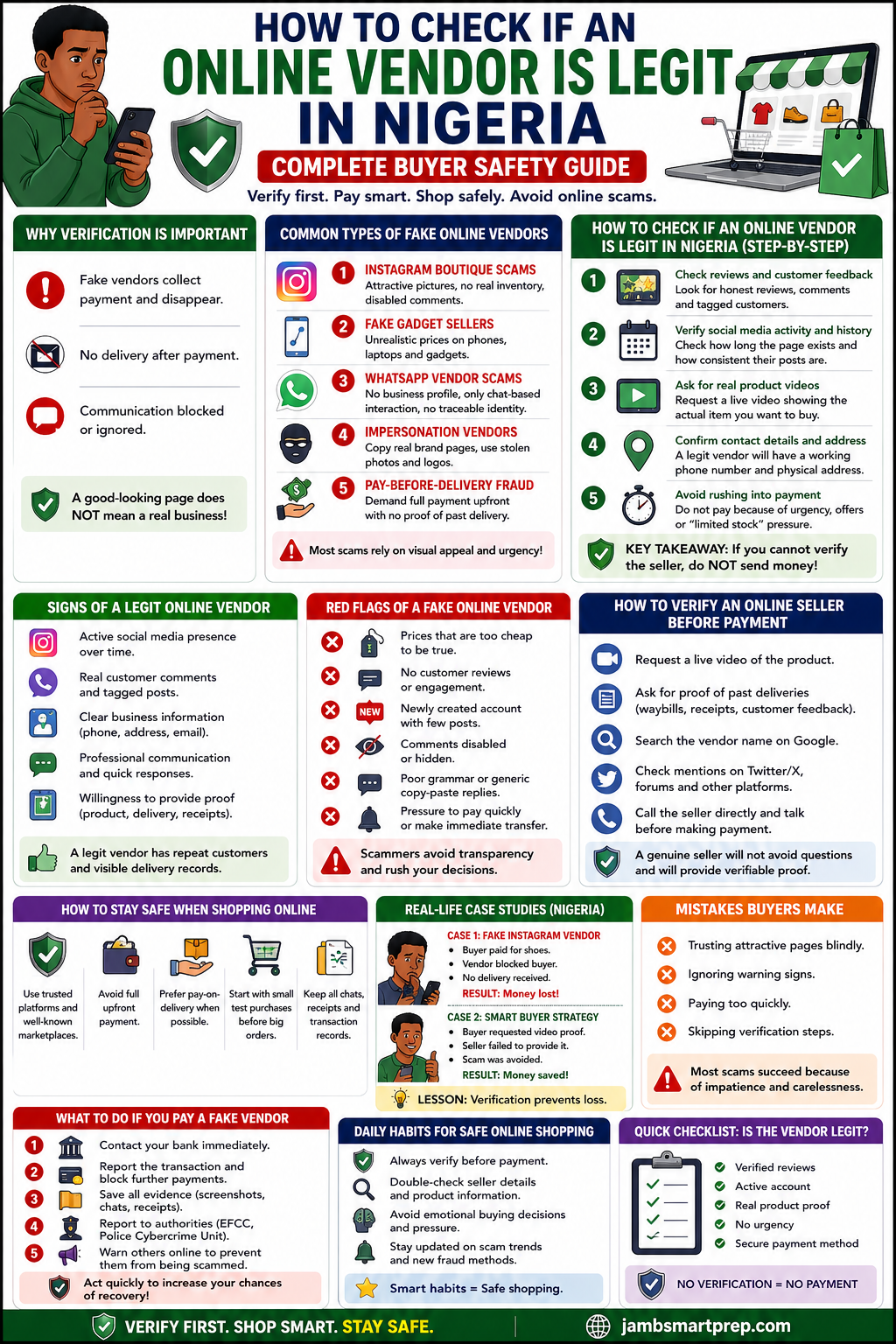
How to Check If an Online Vendor Is Legit in Nigeria
This is the most important part of this guide.
If you follow these steps carefully, you will avoid most scams.
Step 1: Check Reviews and Customer Feedback
- Look for tagged customers
- Read comments under posts
- Watch for repeated complaints
If there are no reviews, be cautious.
Step 2: Verify Social Media Activity
- Check how long the page has existed
- Look for consistent posting history
- Observe engagement (likes, comments)
A legit vendor usually has a history, not just recent activity.
Step 3: Ask for Real Product Videos
Do not rely on pictures alone.
Ask for:
- Live video of the item
- Video showing current date or your name
Scammers often avoid this.
Step 4: Confirm Contact Details
A real vendor should have:
- A working phone number
- A physical location (even if small)
- Clear business identity
Step 5: Avoid Rushing Into Payment
If a seller says:
- “Only 2 items left”
- “Offer ends today”
Pause and think.
Key Takeaway:
If you cannot verify the seller properly, do not send money.
Also read: Signs of a Fake POS Agent in Nigeria (How to Spot and Avoid POS Scams Fast)
Signs of a Legit Online Vendor in Nigeria
Knowing what a real seller looks like helps you decide faster.
Key Signs
- Active page with long-term history
- Real customer reviews and tagged posts
- Clear business details
- Professional communication
- Willingness to provide proof
Example
A student in Lagos wanted to buy a used phone. The vendor provided:
- Video proof
- Previous delivery receipts
- Customer testimonials
That level of transparency is a strong sign of a legit vendor.
Red Flags of a Fake Online Vendor
You should walk away immediately if you notice these signs.
Common Warning Signs
- Prices that are too cheap
- No customer reviews
- Newly created account
- Disabled comments
- Generic replies like “inbox for price” only
- Pressure to pay quickly
Important Insight:
Scammers avoid questions and rush decisions.
How to Verify an Online Seller Before Payment
Before sending money, take these extra steps.
Practical Verification Methods
- Request a live video
- Ask the seller to show the product in real time
- Ask for proof of delivery
- Previous waybills or customer confirmations
- Search online
- Google the business name
- Check Twitter or forums
- Call the seller
- A real vendor will answer confidently
- Check consistency
- Name, voice, and business details should match
Key Insight:
A genuine seller has nothing to hide.
How to Stay Safe When Shopping Online in Nigeria
Even when a vendor looks legit, take precautions.
Safety Tips
- Use trusted platforms when possible
- Avoid full payment upfront
- Choose pay-on-delivery if available
- Start with small purchases
- Keep receipts and chat records
Also read: What to Do If You Send Money to a Scammer in Nigeria (Step-by-Step Recovery Guide)
Real-Life Case Studies (Nigeria)
Case 1: Fake Instagram Vendor
A student ordered sneakers online.
- Paid full amount
- Seller blocked him
- No delivery
Result: Money lost
Case 2: Smart Buyer Approach
Another buyer requested:
- Video proof
- Customer references
The seller could not provide them.
Result: Scam avoided
Lesson
Verification is not optional. It is necessary.
Mistakes Buyers Make When Shopping Online
Many scams happen because of simple mistakes.
Common Errors
- Trusting appearance of a page
- Ignoring warning signs
- Paying too quickly
- Skipping verification
Insight:
Scammers depend on impatience.
What to Do If You Pay a Fake Vendor
If you have already sent money, act fast.
Immediate Steps
- Contact your bank immediately
- Report the transaction
- Save all evidence (screenshots, chats)
- Report to authorities
- Warn others online
Quick action can sometimes help limit losses.
Daily Habits for Safe Online Shopping
Build habits that protect you long-term.
- Always verify before payment
- Double-check seller details
- Avoid emotional buying decisions
- Stay informed about scam trends
Quick Checklist: How to Know a Vendor Is Legit
✔ Verified reviews
✔ Active account
✔ Real product proof
✔ No urgency
✔ Clear communication
❌ No verification = No payment
FAQs (Comprehensive SEO Section)
How do I know if an online vendor is legit in Nigeria?
Check reviews, verify social media history, request product proof, and confirm identity before payment.
How can I verify an online seller before payment in Nigeria?
Ask for live video proof, call the seller, check online reviews, and confirm business details.
What are signs of a fake online vendor?
Cheap prices, no reviews, new accounts, urgency, and refusal to provide proof.
Is it safe to buy from Instagram vendors in Nigeria?
Yes, but only after proper verification. Many legit vendors exist, but scams are also common.
How can I avoid online shopping scams in Nigeria?
Verify sellers, avoid rushing, use trusted platforms, and never pay without proof.
Can I trust WhatsApp vendors in Nigeria?
Only if they provide verifiable identity, history, and proof of past transactions.
What should I check before sending money to a vendor?
- Reviews
- Product proof
- Seller identity
- Payment method
How to Check If an Online Vendor Is Legit in Nigeria
Before You Pay:
- Check reviews
- Verify seller
- Request proof
Red Flags:
- Cheap prices
- No reviews
- Urgency
Safety Tips:
- Use trusted platforms
- Avoid upfront payment
- Confirm identity
Golden Rule:
No verification = No payment
Conclusion
Online shopping in Nigeria is convenient, but it requires caution.
The key lesson is simple. Do not trust blindly. Verify first.
Most scams succeed because buyers rush or assume that a good-looking page means a real business.
If you take your time to:
- Check reviews
- Request proof
- Confirm identity
you will avoid most problems.
Take Action Today
- Apply these steps before your next purchase
- Share this guide with friends and family
- Stay alert when shopping online
Quick Question:
Have you ever bought from an online vendor in Nigeria? What made you trust or doubt them?