Selling online in Nigeria has become part of everyday life. From phones and laptops to clothes and cars, many people now rely on platforms like Facebook Marketplace and WhatsApp to make sales. Yet one problem keeps showing up again and again, fake buyers.
You may have asked yourself:
How do I know if a buyer is genuine?
What are the signs of a fake buyer in Nigeria?
How can I avoid losing money or goods before payment?
The truth is simple. Many sellers fall victim because they do not recognize warning signs early enough.
This guide explains how to know a fake buyer in Nigeria before payment. You will learn common scam tactics, clear red flags, and practical steps to protect yourself and your business.
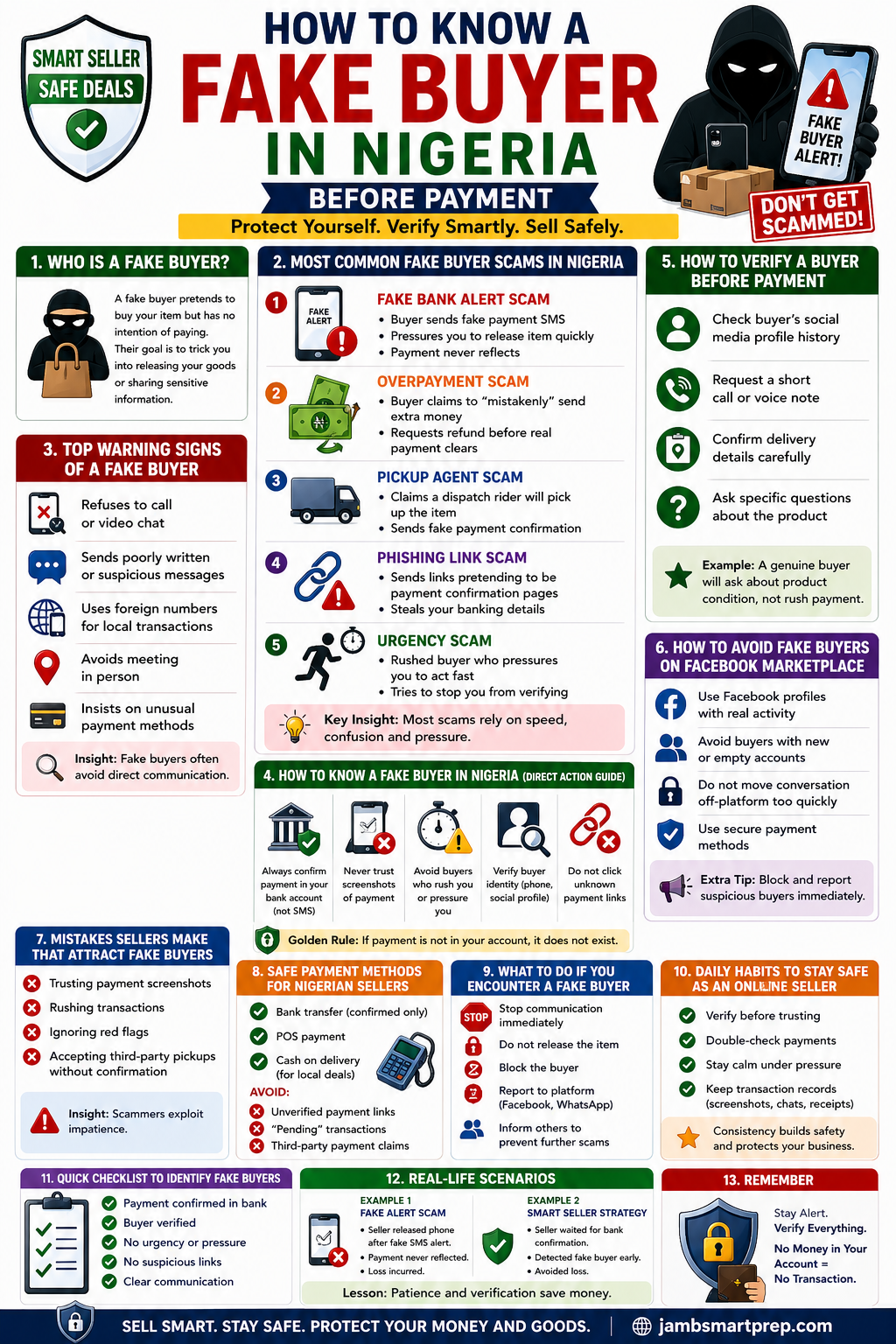
Who Is a Fake Buyer?
A fake buyer is someone who pretends to be interested in purchasing your product but has no intention of paying genuinely. Their goal is to trick you into releasing goods or sharing sensitive information.
Common tactics used by fake buyers in Nigeria:
- Sending fake payment alerts
- Showing edited bank screenshots
- Claiming overpayment to request refunds
- Sending phishing links disguised as payment confirmation
- Using third-party pickup excuses
With the growth of online selling in Nigeria, especially on social platforms, these scams have become more common.
Most Common Fake Buyer Scams in Nigeria
Understanding these scams is the first step in protecting yourself.
1. Fake Bank Alert Scam
A buyer sends a fake SMS alert that looks like a bank notification.
- They pressure you to release the item quickly
- You later discover no money entered your account
2. Overpayment Scam
The buyer claims to have sent more money than required.
- They ask you to refund the “extra” amount
- The original payment never existed
3. Pickup Agent Scam
The buyer says a dispatch rider or agent will pick up the item.
- They send fake payment proof
- Once you release the item, they disappear
4. Phishing Link Scam
You receive a link that looks like a payment confirmation page.
- It asks for your banking details
- Your account gets compromised
5. Urgency Scam
The buyer rushes you.
- “I need it today”
- “I’ve already sent the money”
This tactic reduces your chances of verifying the transaction properly.
How to Know a Fake Buyer in Nigeria (Action Guide)
If you want to avoid fake buyers when selling online, focus on these simple but effective rules.
1. Confirm Payment in Your Bank Account
Never rely on:
- SMS alerts
- Screenshots
- Email notifications
Only trust what reflects in your bank account.
2. Ignore Payment Screenshots
Screenshots can be edited within minutes. They are not proof of payment.
3. Avoid Rushed Transactions
Fake buyers often create pressure.
A genuine buyer will give you time to confirm payment.
4. Verify Buyer Identity
Before proceeding:
- Ask for a phone call
- Check their social media profile
- Confirm basic details
5. Never Click Unknown Links
If a buyer sends a payment link, do not open it unless you trust the source.
Top Warning Signs of a Fake Buyer
Recognizing warning signs early can save you from losses.
Buyer scam warning signs include:
- Refuses to call or speak directly
- Sends poorly written or suspicious messages
- Uses foreign numbers for local deals
- Avoids meeting in person
- Pushes unusual payment methods
- Insists on quick delivery before confirmation
Most fake buyers avoid direct communication because it exposes them.
How to Verify a Buyer Before Payment
Verification is one of the strongest tools you have.
Steps to verify a buyer:
- Check social media profile
- Look for real activity
- Avoid new or empty accounts
- Request a call or voice note
- Genuine buyers usually agree
- Ask product-related questions
- Real buyers show interest in details
- Confirm delivery information
- Ensure details match their identity
Example:
A serious buyer will ask about condition, usage, or warranty. A scammer focuses only on payment speed.
Also read: How to Avoid Online Scams in Nigeria (Complete Beginner Guide)
How to Avoid Fake Buyers on Facebook Marketplace
Facebook Marketplace is popular, but it also attracts scammers.
Tips to stay safe:
- Deal with buyers who have active profiles
- Avoid moving chats off Facebook too quickly
- Be cautious with newly created accounts
- Use secure payment methods only
If something feels off, trust your judgment.
Real-Life Scenario (Case Study)
Example 1: Fake Alert Scam
A seller listed a smartphone online.
A buyer sent a fake bank alert and rushed the seller.
The seller released the phone.
No money was received.
Outcome: Loss of both product and money.
Example 2: Smart Seller Approach
Another seller received a similar alert.
Instead of rushing, they waited for bank confirmation.
The payment never appeared.
The buyer stopped responding.
Outcome: Loss avoided.
Lesson:
Patience and verification protect your business.
Mistakes Sellers Make That Attract Fake Buyers
Many scams succeed because of simple mistakes.
Common errors:
- Trusting payment screenshots
- Rushing to close deals
- Ignoring warning signs
- Accepting third-party pickups blindly
- Skipping verification steps
Fake buyers depend on these mistakes.
Safe Payment Methods for Nigerian Sellers
Choosing the right payment method reduces risk.
Recommended methods:
- Bank transfer (confirmed only)
- POS payment
- Cash on delivery (for local deals)
Avoid:
- Unverified payment links
- “Pending” transactions
- Third-party payment claims
What to Do If You Encounter a Fake Buyer
If you suspect a scam:
Take these steps immediately:
- Stop communication
- Do not release the item
- Block the buyer
- Report the account
- Inform other sellers
Early action prevents further attempts.
Daily Habits to Stay Safe as an Online Seller
Safety comes from consistency.
Build these habits:
- Always verify before trusting
- Double-check every payment
- Stay calm during transactions
- Keep records of all deals
These simple habits make a big difference over time.
Quick Checklist to Identify Fake Buyers
Before completing any sale, confirm:
- Payment reflects in your account ✔
- Buyer identity is verified ✔
- No unnecessary urgency ✔
- No suspicious links ✔
- Clear and honest communication ✔
FAQs: How to Know a Fake Buyer in Nigeria
How do I know if a buyer is legit in Nigeria?
A legitimate buyer will communicate clearly, ask relevant questions, and allow you to confirm payment without pressure.
What are signs of a fake buyer online?
Urgency, fake payment proof, refusal to call, and suspicious messages are common signs.
How can I avoid scam buyers on Facebook Marketplace?
Deal with verified profiles, avoid rushed transactions, and confirm payment before releasing items.
What should I do if a buyer sends a fake alert?
Do not release the item. Wait for bank confirmation and block the buyer.
How can I verify a buyer before payment in Nigeria?
Check their profile, request a call, and confirm their details before proceeding.
Fake Buyer Detection Guide (Nigeria)
Common Scams:
- Fake alerts
- Overpayment
- Pickup scams
Warning Signs:
- Urgency
- Fake proof
- No clear identity
Safety Tips:
- Confirm payment
- Verify buyer
- Avoid unknown links
Golden Rule:
No money in your account = No transaction
Conclusion
Fake buyers are a real challenge for online sellers in Nigeria, but they are not difficult to spot once you understand their patterns.
The key points remain simple:
- Always confirm payment in your bank account
- Never trust screenshots or alerts
- Take your time before releasing any item
- Verify every buyer carefully
Online selling can be safe and profitable when you apply these principles consistently.
If you are serious about protecting your business, start using these tips in your next transaction. Share this guide with others who sell online, and stay alert at all times.
Have you ever encountered a fake buyer? What signs did you notice?