Many Nigerians now shop, bank, and run small businesses online. It is fast and convenient, but it also comes with risks. Cases of online scams in Nigeria have increased as more people depend on digital platforms for daily transactions.
You may have asked questions like:
- How do I avoid online scams in Nigeria?
- How can I know if a website or seller is real?
The challenge is simple. Most victims do not recognize scam patterns early enough. A message looks normal. A deal looks attractive. Before long, money is gone.
This guide explains how to avoid online scams in Nigeria in a clear and practical way. You will learn how scams work, how to detect them, and how to protect your money and personal information.
What Are Online Scams?
Online scams in Nigeria refer to fraudulent activities carried out through the internet to trick people into giving away money or sensitive information.
Scammers often operate through:
- Fake websites that look real
- Social media platforms like Facebook, Instagram, and WhatsApp
- Phishing emails and SMS messages
With the growth of mobile banking and e-commerce in Nigeria, online fraud has become more common. According to reports from financial institutions, thousands of Nigerians lose money yearly due to phishing attacks and fake online transactions.
Understanding how these scams work is the first step in staying safe.
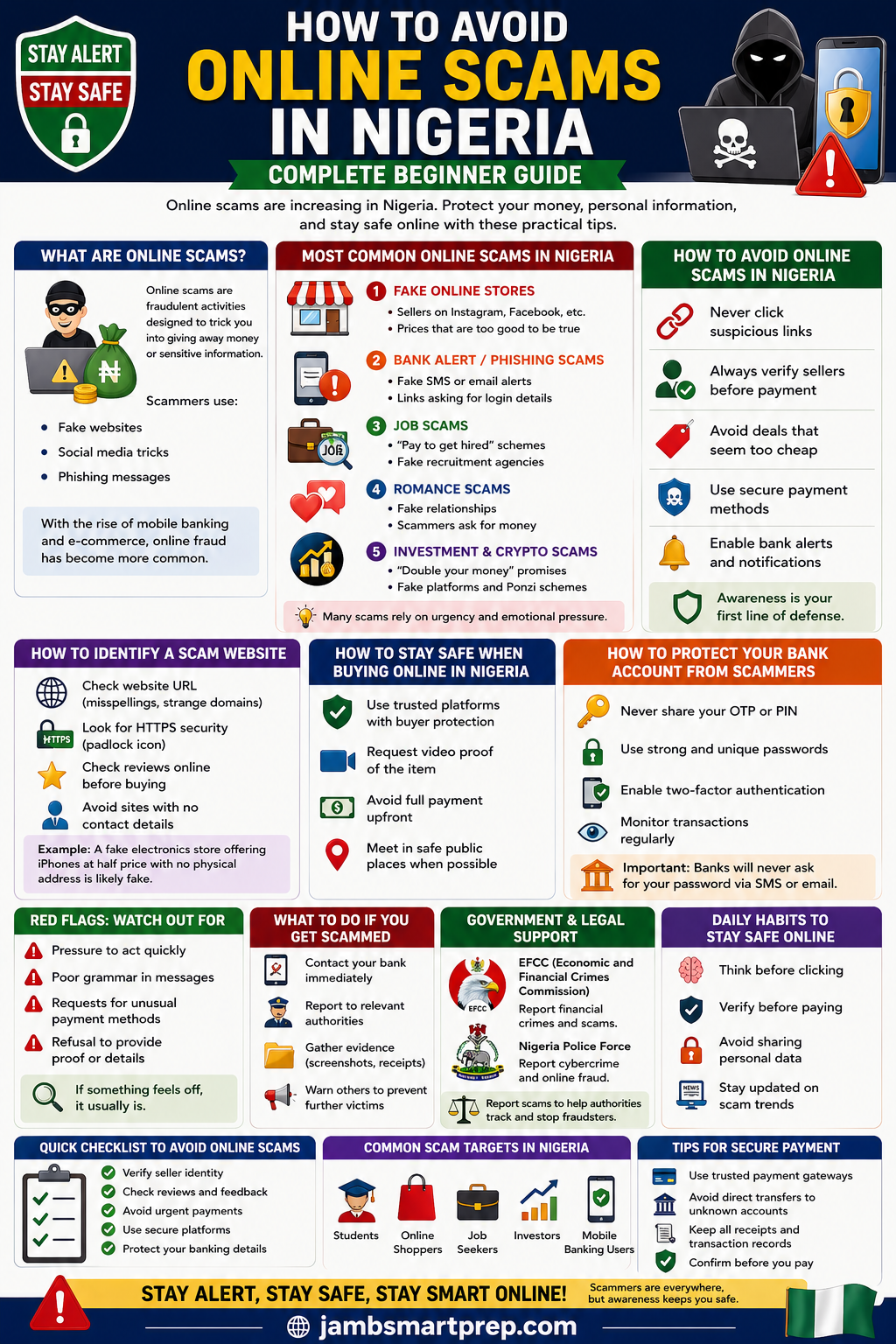
Most Common Online Scams in Nigeria
To practice proper internet fraud prevention in Nigeria, you need to know the common scams in Nigeria.
1. Fake Online Stores
This is one of the most widespread scams.
- Sellers advertise products on Instagram or Facebook
- Prices are unusually cheap
- After payment, the seller disappears
For example, a vendor may advertise a brand-new iPhone at half the market price. Many buyers rush to pay, only to be blocked.
2. Bank Alert and Phishing Scams
Scammers send messages that look like official bank alerts.
- “Your account has been restricted, click here to fix it”
- Links lead to fake login pages
- Victims enter their details, giving scammers full access
3. Job Scams
Many job seekers fall victim to this.
- Fake companies ask for “registration fees”
- Promises of high-paying jobs
- No actual job exists
4. Romance Scams
Scammers create fake profiles and build emotional connections.
- They gain trust over time
- Then request money for emergencies
5. Investment and Crypto Scams
These promise quick returns.
- “Double your money in 24 hours”
- Fake trading platforms
- Ponzi schemes disguised as investments
Key insight: Most scams rely on urgency and emotion. Once you feel pressured, your judgment becomes weaker.
How to Avoid Online Scams in Nigeria (Practical Guide)
If you are serious about learning how to avoid online scams in Nigeria, these steps will help you stay safe.
- Never click on suspicious links
- Always verify sellers before making payment
- Avoid deals that look too cheap
- Use secure payment methods
- Enable bank alerts and notifications
Take your time before making decisions online. Scammers depend on speed and panic.
How to Identify a Scam Website
Knowing how to detect scam websites can save you from major losses.
Check the following:
- Website URL: Look for strange spellings or unusual domains
- Security: Ensure the site starts with “https”
- Reviews: Search for feedback from other users
- Contact details: Avoid websites with no phone number or address
Example:
A website selling expensive electronics at very low prices without any verifiable contact details is likely fake.
How to Stay Safe When Buying Online in Nigeria
Online shopping is common, but caution is necessary.
Here are practical online fraud tips in Nigeria:
- Use trusted platforms with buyer protection
- Request video proof of the product
- Avoid paying full amount upfront
- Meet sellers in public places when possible
For instance, many buyers now insist on inspecting phones physically before payment. This simple step has prevented many losses.
How to Protect Your Bank Account from Scammers
Protecting your finances is critical.
To improve internet fraud prevention in Nigeria, follow these steps:
- Never share your OTP or PIN
- Use strong and unique passwords
- Enable two-factor authentication
- Monitor your account regularly
Important: No bank will ask for your password via SMS or email. If you receive such a request, it is a scam.
Red Flags That Show You Are Dealing with a Scammer
Many scams follow similar patterns. Watch out for:
- Pressure to act quickly
- Poor grammar or suspicious messages
- Requests for unusual payment methods
- Refusal to provide proof or details
If something feels wrong, do not ignore it. That instinct is often correct.
Real-Life Scenarios (Nigerian Examples)
Case 1: Fake Phone Seller
A student saw a phone advertised online at a very low price. Without verifying the seller, he made payment.
- Result: The seller blocked him immediately
- Lesson: Always verify before paying
Case 2: Job Scam Victim
A graduate applied for a job online and was asked to pay a processing fee.
- Result: No job was offered
- Lesson: Legitimate employers do not charge applicants
These examples show that scams are predictable when you know what to look for.
What to Do If You Get Scammed in Nigeria
If you fall victim, act quickly.
- Contact your bank immediately
- Report the incident to authorities
- Gather evidence such as screenshots and receipts
- Inform others to prevent further victims
You can report cases to agencies like the Economic and Financial Crimes Commission and the Nigeria Police Force.
Government and Legal Support Against Online Fraud
Nigeria has agencies that handle cybercrime.
- The Economic and Financial Crimes Commission investigates financial crimes
- The Nigeria Police Force handles criminal reports
Reporting scams helps authorities track patterns and reduce future cases.
Simple Daily Habits to Stay Safe Online
Staying safe online is not difficult if you build the right habits.
- Think before clicking any link
- Verify information before making payment
- Avoid sharing sensitive data
- Stay informed about new scam methods
Consistency is key. Small habits can prevent big losses.
Quick Checklist to Avoid Online Scams
Before making any online transaction, ask yourself:
- Have I verified the seller?
- Are there genuine reviews?
- Is the payment method secure?
- Does anything feel suspicious?
If you answer “no” to any of these, pause and reconsider.
FAQs About Online Scams in Nigeria
How can I avoid online scams in Nigeria?
Stay alert, verify every transaction, avoid suspicious links, and never rush into payments.
What are the most common scams in Nigeria?
Fake online stores, phishing messages, job scams, romance scams, and investment scams.
How do I know if a website is a scam?
Check the URL, look for HTTPS security, read reviews, and confirm contact details.
How can I protect my bank account from scammers in Nigeria?
Do not share your PIN or OTP, use strong passwords, and enable two-factor authentication.
What should I do if I get scammed in Nigeria?
Contact your bank immediately, report to authorities, and gather all evidence.
Can I recover money lost to online scams?
Recovery is not guaranteed, but quick reporting increases your chances.
Are online marketplaces safe in Nigeria?
They are safe if you follow proper verification steps and avoid risky transactions.
How to Avoid Online Scams in Nigeria (Quick Guide)
Common Scams:
- Fake online stores
- Job scams
- Phishing messages
- Investment scams
Warning Signs:
- Urgent requests
- Unrealistic offers
- No contact details
Safety Tips:
- Verify sellers
- Avoid suspicious links
- Use secure payment methods
Emergency Steps:
- Contact your bank
- Report the scam
- Save all evidence
Conclusion
Online scams are a real concern, but they are not impossible to avoid. Once you understand how they work, you can protect yourself with simple and consistent habits.
Most scams succeed because people act too quickly without verification. Taking a few extra minutes to check details can save you from serious loss.
Start applying these tips today:
- Verify before paying
- Avoid suspicious links
- Protect your banking details
If you found this guide helpful, share it with friends and family. You might help someone avoid becoming the next victim.
Now over to you:
Have you ever encountered an online scam? What warning signs did you notice?
