Each year, thousands of Nigerian students seek education opportunities outside the country. According to UNESCO, over 75,000 Nigerians are enrolled in foreign universities annually, making Nigeria one of the top African countries sending students abroad.
The reasons are clear. Many students want access to better facilities, global recognition of degrees, scholarship opportunities, and sometimes more stable academic calendars compared to the frequent strikes in Nigerian universities. Parents also see it as an investment in their children’s future, while students themselves desire global exposure.
But studying abroad is not only about choosing the most popular destinations like the US or UK. For many Nigerian families, affordability and job prospects matter. This guide explores the best countries for Nigerian students to study abroad in 2026, focusing on cost, scholarships, jobs, and visa friendliness.
Key Factors to Consider Before Choosing a Country
Before packing your bags, weigh these important factors:
1. Cost of Tuition and Living Expenses
-
Countries like Germany and Norway offer tuition-free or low-cost education.
-
Places like Canada and the UK have higher fees but more part-time job opportunities.
2. Visa Policies
-
Some countries give easier post-study work visas (e.g., Canada’s Post-Graduation Work Permit).
-
Others have stricter immigration policies, making long-term stay harder.
3. Scholarship Availability
-
Look for countries that regularly award scholarships to Nigerians, such as Chevening (UK), DAAD (Germany), or Turkiye Burslari (Turkey).
4. Part-time Jobs
-
Countries like Canada, the UK, and Australia allow students to work up to 20 hours per week, helping them fund living expenses.
5. Language of Instruction
-
If you want to avoid language barriers, choose English-speaking destinations.
-
Non-English countries like Germany, France, and Turkey often offer English-taught programs, but some local knowledge is needed.
20 Best Affordable Countries for Nigerian Students in 2026/2027
Below are the top study destinations balancing cost, opportunities, and visa policies:
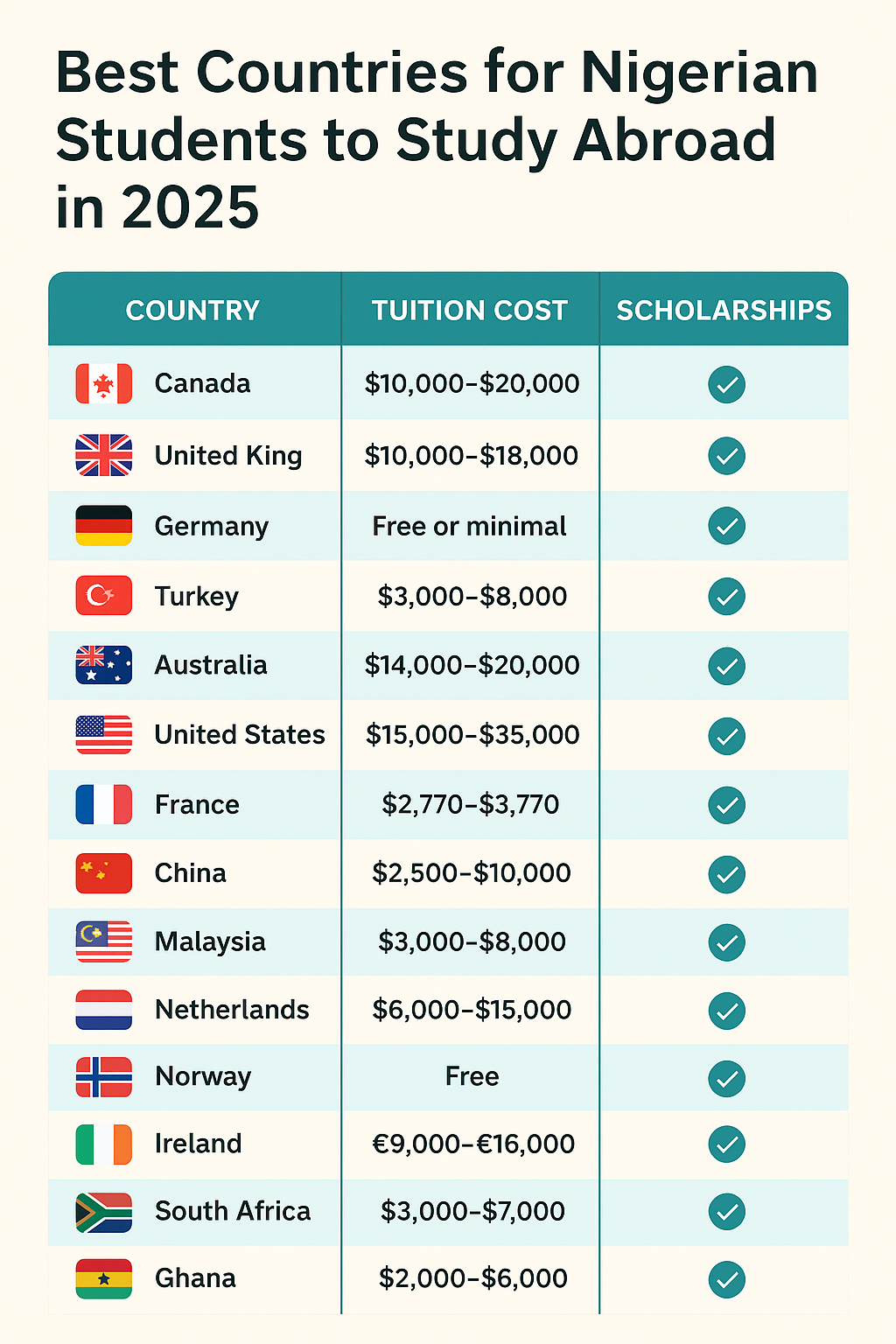
1. Canada
-
Tuition Fees: $10,000–$20,000 per year
-
Pros: Easy student visa, work opportunities, Post-Graduation Work Permit (PGWP)
-
Cons: High cost of living in cities like Toronto and Vancouver
2. United Kingdom (UK)
-
Tuition Fees: £10,000–£18,000 per year
-
Pros: World-class universities, 2-year Graduate Route visa, Nigerian community support
-
Cons: Expensive rent and living costs, high visa fees
3. Germany
-
Tuition Fees: Free or minimal at public universities
-
Pros: Free tuition, high-quality engineering programs, DAAD scholarships
-
Cons: German language required for daily life, limited part-time jobs in some cities
4. Turkey
-
Tuition Fees: $3,000–$8,000 per year
-
Pros: Affordable living, Turkish government scholarships, cultural diversity
-
Cons: Language barrier outside major cities, fewer part-time job options
5. Australia
-
Tuition Fees: AUD 14,000–$20,000 per year
-
Pros: Strong job market, Nigerian student associations, permanent residency pathways
-
Cons: Expensive cities like Sydney and Melbourne
6. United States
-
Tuition Fees: $15,000–$35,000 per year (varies widely)
-
Pros: Large Nigerian diaspora, high-ranked universities, scholarships available
-
Cons: Expensive tuition, strict visa process
7. France
-
Tuition Fees: €2,770–€3,770 per year (public universities)
-
Pros: Low fees, English programs available, cultural exposure
-
Cons: Language requirement for long-term stay
8. China
-
Tuition Fees: $2,500–$10,000 per year
-
Pros: Affordable, Chinese government scholarships, booming job market
-
Cons: Language and cultural adjustment, limited permanent residency options
9. Malaysia
-
Tuition Fees: $3,000–$8,000 per year
-
Pros: Affordable, multicultural environment, growing Nigerian community
-
Cons: Limited post-study work opportunities
10. Netherlands
-
Tuition Fees: €6,000–€15,000 per year
-
Pros: English-taught programs, job opportunities in tech and finance
-
Cons: Competitive scholarships, moderate living costs
11. Norway
-
Tuition Fees: Free for all students (public universities)
-
Pros: Tuition-free education, high-quality teaching
-
Cons: High living costs, cold climate
12. Ireland
-
Tuition Fees: €9,000–€16,000 per year
-
Pros: English-speaking, strong tech industry, 2-year work visa after graduation
-
Cons: Cost of living in Dublin is high
13. South Africa
-
Tuition Fees: $3,000–$7,000 per year
-
Pros: Proximity to Nigeria, affordable fees, diverse culture
-
Cons: Safety concerns in some cities
14. Ghana
-
Tuition Fees: $2,000–$6,000 per year
-
Pros: Closer to home, affordable, cultural similarity
-
Cons: Limited international recognition compared to Europe/US
15. Poland
-
Tuition Fees: €2,000–€6,000 per year
-
Pros: Affordable, EU degree recognition, scholarships available
-
Cons: Polish language needed outside classrooms
16. United Arab Emirates (UAE)
-
Tuition Fees: $10,000–$20,000 per year
-
Pros: Proximity to Nigeria, part-time job opportunities, world-class facilities
-
Cons: Expensive lifestyle, strict visa conditions
17. Sweden
-
Tuition Fees: €8,000–€15,000 per year
-
Pros: Research-focused programs, English-taught courses
-
Cons: High living costs, limited scholarships for non-EU students
18. Hungary
-
Tuition Fees: €2,000–€6,000 per year
-
Pros: Affordable, Stipendium Hungaricum scholarships, EU recognition
-
Cons: Limited English-speaking environment
19. New Zealand
-
Tuition Fees: NZD 14,000–$20,000 per year
-
Pros: Quality education, post-study work visas
-
Cons: Long distance from Nigeria, high living expenses
20. Cyprus
-
Tuition Fees: €3,000–€7,000 per year
-
Pros: Affordable tuition, English programs available
-
Cons: Fewer international job opportunities after graduation
Pros and Cons of Studying Abroad for Nigerians
Pros
-
Global recognition of degrees
-
Access to modern facilities
-
Better job opportunities
-
Scholarships and funding options
-
Cultural exposure and networking
Cons
-
High tuition and living costs in some countries
-
Language and cultural adaptation
-
Visa rejections or strict immigration policies
-
Homesickness and adjustment issues
-
Limited part-time job opportunities in certain regions
15 Tips for Choosing the Right Country
-
Compare tuition fees across countries.
-
Research living costs (accommodation, transport, food).
-
Check if scholarships are available for Nigerians.
-
Prioritize countries with flexible post-study work permits.
-
Choose English-speaking countries if you don’t want a language barrier.
-
Consider proximity to Nigeria (e.g., Ghana, South Africa, UAE).
-
Look for countries with strong Nigerian student associations.
-
Study job opportunities in your field before applying.
-
Avoid countries with high visa rejection rates for Nigerians.
-
Apply early for scholarships (Chevening, DAAD, Turkiye Burslari).
-
Use official university portals, not unverified agents.
-
Balance prestige of the university with cost.
-
Consider safety and security in the host country.
-
Check if degrees are recognized globally (especially medical and law).
-
Talk to Nigerian alumni of the country you’re considering.
Frequently Asked Questions (FAQ)
Q1. Which country is cheapest for Nigerians to study abroad?
Germany and Norway are among the cheapest because of free tuition, but students should budget for high living expenses. Turkey and Malaysia are also affordable.
Q2. Which country accepts the most Nigerian students?
The UK and Canada remain the top destinations, admitting tens of thousands of Nigerian students annually.
Q3. Can Nigerian students work while studying abroad?
Yes. Most countries allow 15–20 hours per week during term and full-time during breaks. Canada, UK, and Australia are popular for this reason.
Q4. Which scholarships are best for Nigerian students?
-
Chevening Scholarships (UK)
-
DAAD Scholarships (Germany)
-
Turkiye Burslari (Turkey)
-
Erasmus Mundus (EU countries)
-
PTDF Overseas Scholarships (Nigeria’s Petroleum Trust Development Fund)
Q5. Which country gives easy student visa to Nigerians?
Canada, UK, and Turkey have relatively straightforward student visa processes if documentation is correct.
Q6. Can I stay after studying abroad?
Yes. Many countries like Canada, UK, Australia, and Ireland offer post-study work permits or graduate visas.
Conclusion
Studying abroad is a life-changing opportunity for Nigerian students, but the right choice depends on your budget, career goals, and personal preferences. Countries like Germany, Turkey, Canada, and Malaysia remain affordable, while the UK and US offer prestige but at higher costs.
The key is to plan early, explore scholarships, and apply to institutions with strong Nigerian support networks. With determination and preparation, you can join the growing number of Nigerians building successful careers through international education.
If you found this guide useful, consider subscribing to our newsletter for study abroad updates, scholarship alerts, and admission tips tailored for Nigerian students.
