
You receive a message on your phone. It says you have won a prize, secured a job, or need to act fast to avoid losing money. The message looks urgent. It feels real.
This is how many online scams in Nigeria begin.
Every day, students, job seekers, and small business owners lose money to simple tricks that could have been avoided with a little awareness. Whether it is a fake job offer after applying for admission updates or a suspicious message during your JAMB registration process, the risk is real.
So, what are the most common scam tricks in Nigeria?
How do scammers operate?
And more importantly, how can you avoid being scammed?
This guide explains everything in clear terms. By the end, you will know how to identify scam patterns and protect yourself in real situations.
What Are Scam Tricks?
Online scams in Nigeria are deceptive methods used by fraudsters to trick people into giving away money, personal information, or access to their accounts.
These scams work because they target basic human emotions:
- Trust
- Fear
- Urgency
- Greed
For example, a student waiting for admission updates may quickly believe a fake message claiming, “Pay now to secure your admission slot.” The message creates urgency and fear at the same time.
Also read: Signs of a Fake POS Agent in Nigeria (How to Spot and Avoid POS Scams Fast)
With the rise of mobile banking, POS transactions, and social media platforms like WhatsApp and Instagram, scam tactics have become more widespread.
Key Insight:
Scams are often simple. Their power lies in how they influence your decisions.
Why Scam Cases Are Increasing in Nigeria
Internet fraud in Nigeria has grown alongside digital adoption.
Here are a few reasons:
- More online transactions: Payments, shopping, and school fees are now done digitally
- High smartphone usage: Almost every student has access to the internet
- Social media influence: Platforms make it easy to impersonate others
- Low awareness: Many people still do not recognize scam patterns
According to reports from financial institutions, fraud attempts increase during peak periods such as admission seasons, scholarship announcements, and exam registrations like JAMB and WAEC.
Key Insight:
Scammers follow trends. When more people go online, fraud increases.
Most Common Scam Tricks in Nigeria
Understanding common scam tricks in Nigeria is the first step to avoiding them.
a. Fake Bank Alert Scam
This is one of the most common tactics.
- A buyer sends a fake payment alert
- Pressures you to release goods immediately
- The money never reflects in your account
b. Online Marketplace Scam
Seen on Instagram, Facebook, and WhatsApp:
- Fake sellers post attractive products
- Buyers pay upfront
- Seller disappears or blocks the buyer
c. Job Offer Scam
Common among students and graduates:
- “You have been shortlisted” messages
- Requests for application or training fees
- No actual job exists
d. Romance Scam
- Scammer builds a relationship over time
- Gains trust
- Requests financial help
e. Investment and Crypto Scam
- Promises like “double your money in 24 hours”
- Often structured like Ponzi schemes
- Early participants may get paid to attract more victims
f. Phishing Scam
- Fake emails or SMS with links
- Imitate banks or institutions
- Ask for login details or OTP
g. POS and ATM Scam
- Card swapping
- Fake debit alerts
- Unauthorized withdrawals
Key Insight:
Most scam tactics depend on speed, pressure, and lack of verification.
Also read: How to Verify a Phone Number in Nigeria Before Sending Money
How Scammers Operate in Nigeria
To understand how to avoid scams in Nigeria, you need to know how scammers think.
Common scam tactics in Nigeria include:
- Using fake identities: Stolen photos and names
- Building trust first: Friendly conversations before asking for money
- Creating urgency: “Act now or lose this opportunity”
- Manipulating emotions: Fear, excitement, or sympathy
Example:
A scammer may chat with a student for days, discussing school or exams, before introducing a fake scholarship opportunity that requires payment.
How to Identify Scam Messages and Offers
Learning how to identify scam messages in Nigeria can save you from serious loss.
Watch out for:
- Poor grammar or awkward sentence structure
- Suspicious or shortened links
- Requests for sensitive details like PIN or OTP
- Messages that sound too good to be true
- Unexpected “urgent” requests
Quick Tip:
If a message creates panic or excitement, stop and verify before acting.
Also read: How to Avoid Getting Scammed on Instagram in Nigeria
How to Avoid Scams in Nigeria (Action Guide)
If you are wondering how you can avoid being scammed in Nigeria, start with these simple steps.
Practical Fraud Prevention Tips in Nigeria:
- Never click unknown links
- Always verify identity before sending money
- Avoid rushed financial decisions
- Use secure and traceable payment methods
- Enable transaction alerts on your bank account
- Cross-check information from multiple sources
For example, if you receive a message about JAMB admission upgrades, confirm from the official portal before making any payment.
Key Takeaway:
Verification is your strongest protection.
Red Flags That Indicate a Scam
These warning signs appear in most scams:
- Urgent requests for money
- Lack of clear identity or address
- Conflicting or inconsistent information
- Refusal to answer direct questions
- Requests for unusual payment methods
Insight:
If something feels off, it usually is.
Real-Life Scam Scenarios in Nigeria
Case 1: Fake Buyer
A student selling a used phone receives a payment alert.
- Buyer pressures for quick delivery
- Seller releases the phone
- Payment never reflects
Case 2: Job Scam Victim
A graduate receives a job offer.
- Pays a “processing fee”
- No further communication
- Job does not exist
Lesson:
Most scams follow similar patterns. Once you recognize them, you can avoid them.
Mistakes People Make That Lead to Scams
Many victims fall into traps because of simple mistakes:
- Trusting strangers too quickly
- Ignoring warning signs
- Rushing transactions
- Sharing sensitive information
Insight:
Scammers rely on emotion, not logic. Slow down and think.
What to Do If You Get Scammed in Nigeria
If you are already a victim, act quickly.
Steps to Take Immediately:
- Contact your bank and report the transaction
- Request account protection or reversal
- Save all evidence, including chats and receipts
- Report to authorities
- Inform others to prevent further victims
Quick action can sometimes increase your chances of recovery.
Government and Legal Support Against Fraud
In Nigeria, you can report scams to:
- The Economic and Financial Crimes Commission (EFCC)
- The Nigeria Police Force
When reporting:
- Provide screenshots and transaction details
- Include phone numbers and account information
- Follow up on your complaint
Important:
Documentation strengthens your case.
Daily Habits to Stay Safe from Scams
Make these habits part of your routine:
- Think before clicking or responding
- Verify every payment request
- Avoid sharing personal information
- Stay updated on new scam trends
These small actions can prevent major losses.
Quick Checklist to Avoid Scam Tricks
Before making any transaction, confirm:
✔ Identity verified
✔ Reviews checked
✔ No urgency involved
✔ Payment confirmed
✔ Platform is secure
❌ If you are unsure, do not proceed
FAQs (SEO-Rich Section)
What are the most common scams in Nigeria?
Fake alerts, job scams, online marketplace scams, phishing, and investment fraud are among the most common.
How do scammers operate in Nigeria?
They use fake identities, build trust, create urgency, and manipulate emotions to trick victims.
How can I avoid being scammed in Nigeria?
Always verify before sending money, avoid rushed decisions, and use secure payment methods.
What should I do if I get scammed in Nigeria?
Contact your bank immediately, gather evidence, and report to authorities like EFCC or the police.
How do I identify a scam message?
Look for poor grammar, suspicious links, urgent tone, and requests for sensitive information.
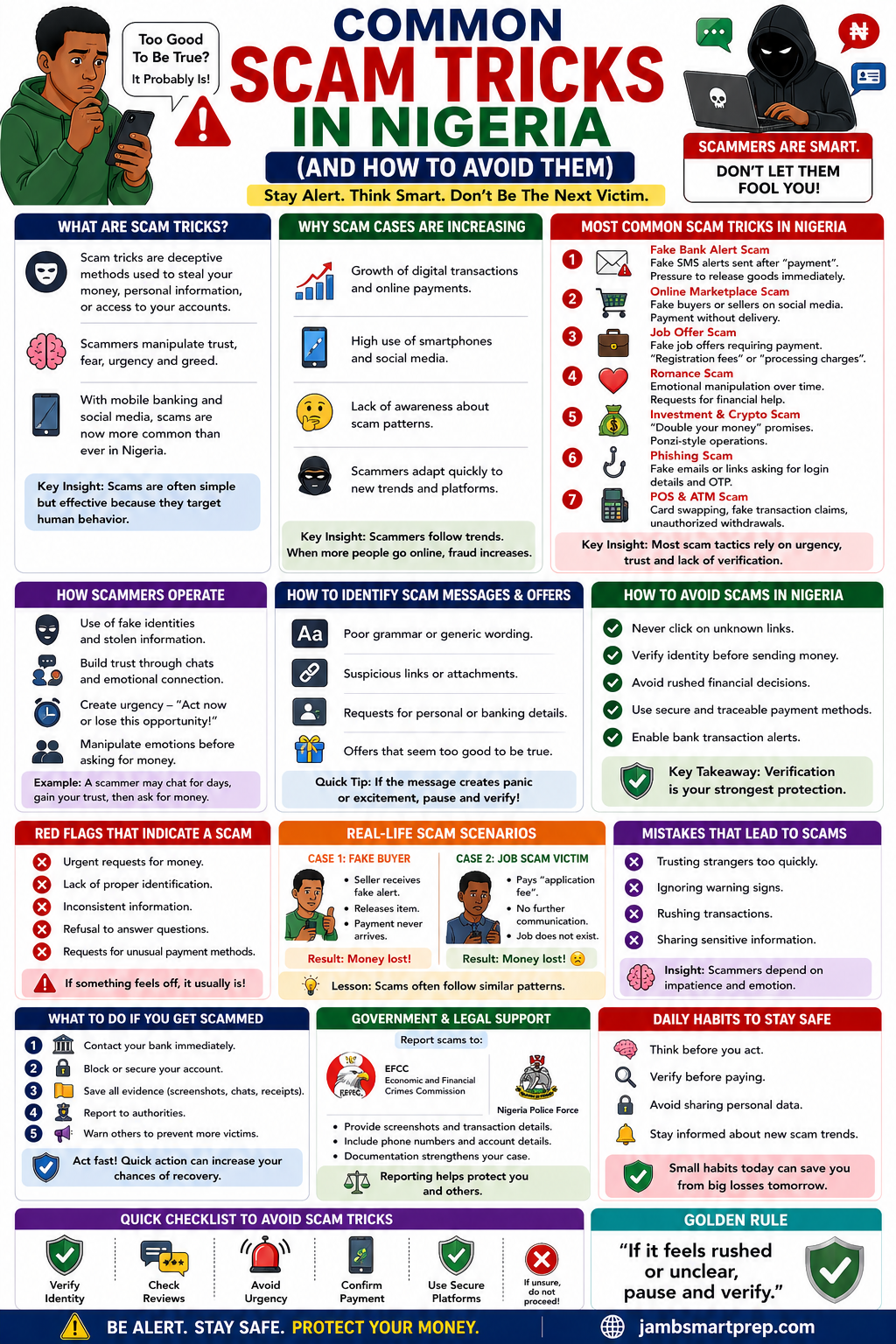
Common Scam Tricks in Nigeria – Quick Visual Guide
Common Scams:
- Fake bank alerts
- Job scams
- Investment fraud
- Phishing messages
Warning Signs:
- Urgent requests
- Unrealistic offers
- No clear identity
Safety Tips:
- Verify identity
- Avoid suspicious links
- Confirm payment
Golden Rule:
If it feels rushed or unclear, pause and verify
Conclusion
Scam tricks in Nigeria are common, but they are not impossible to avoid.
Most scams succeed because people act quickly without checking details. Once you understand how scammers operate and recognize their patterns, you become harder to deceive.
Take your time before making payments. Ask questions. Verify everything.
If this guide has helped you, share it with your friends and classmates. You might save someone from losing money.
Have you ever encountered a scam attempt? What warning sign made you suspicious?
