Everywhere you look in Nigeria today, the conversation about money is changing. Salaries no longer stretch as far as they used to. A bag of rice that once cost ₦7,000 now sells for over ₦80,000, and transport fares rise almost weekly. For many Nigerians, depending only on a single paycheck has become risky.
This is why more people are exploring passive income—ways of earning money that continue to pay you even when you are not actively working.
By the end of this guide, you’ll learn how to build passive income in Nigeria, the best passive income ideas for 2025/2026, and practical steps to get started, even with little money.
What is Passive Income?
Passive income is money you earn with minimal daily effort once the initial work has been done.
-
Active income: the money you earn from your job, salary, or daily hustle. If you don’t work, you don’t get paid.
-
Passive income: the money that flows in whether you are at work, resting, or even sleeping.
In Nigeria, examples of passive income include rent from real estate, interest from savings apps like PiggyVest, or revenue from a YouTube channel.
Also read: How to Build Wealth on a Small Salary In Nigeria – Can You Really Build Wealth on a Small Salary?
Having a passive income stream is no longer a luxury; it’s a necessity for financial freedom in Nigeria.
10 Reasons Why Passive Income Matters in Nigeria
-
Rising inflation – Prices increase almost every month.
-
Unstable economy – Naira depreciation eats into salaries.
-
Youth unemployment – According to the National Bureau of Statistics (NBS), youth unemployment and underemployment was 8.4% in Q1 2024.
-
Job insecurity – Many companies are downsizing.
-
Multiple income streams – Extra earnings provide safety nets.
-
Financial independence – Less reliance on a 9–5 job.
-
Wealth building – Assets grow in value over time.
-
Emergency buffer – Unexpected expenses can be handled.
-
Opportunity to retire early – More freedom in later years.
-
Peace of mind – Reduced financial pressure on families.
This is why multiple income streams in Nigeria are no longer optional—they are vital.
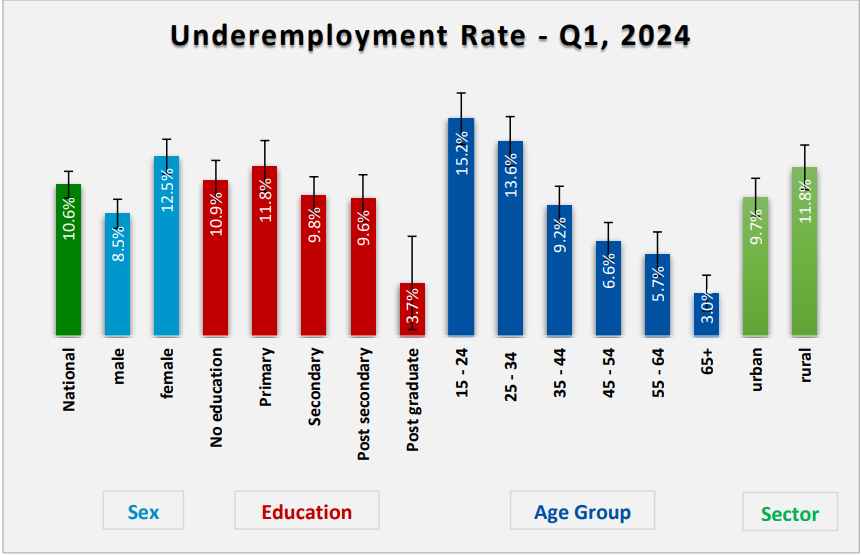
source: nlfs
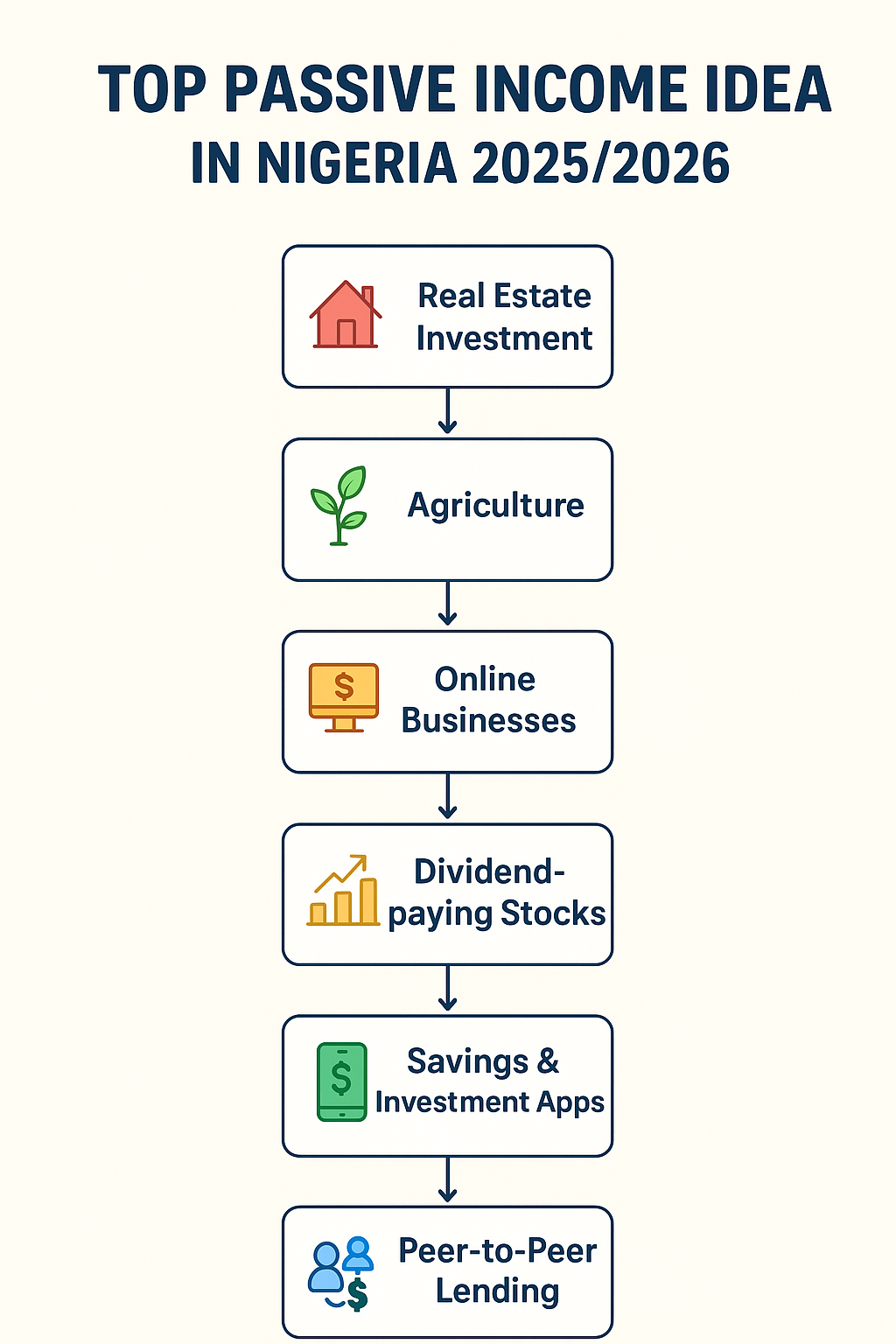
Best Passive Income Ideas in Nigeria (2025/2026)
-
Real estate investment: Buy land, build rental apartments, or list properties on Airbnb.
-
Agriculture partnerships: Invest in poultry or fish farming cooperatives.
-
Online businesses: Blogging, YouTube, or affiliate marketing.
-
Dividend-paying stocks: Companies on the Nigerian Exchange (NGX) pay annual dividends.
-
Savings and investment apps: PiggyVest, Cowrywise, and Risevest allow Nigerians to invest with little money.
These remain the best passive income ideas in Nigeria for 2025/2026.
7 Low-Cost Passive Income Opportunities for Beginners
Starting small is possible. With ₦200,000–₦1000000, you can try:
-
Savings groups (ajo/esusu) with digital apps.
-
E-books and online guides (e.g., JAMB/WAEC prep materials).
-
Mini-importation of simple items for resale.
-
Blogging with free platforms, then monetizing later.
-
Dropshipping through Jumia or Konga.
-
Freelancing + digital products (e.g., Canva templates).
-
Music or art royalties (sell beats, stock photos).
These are real low-cost passive income ideas in Nigeria—especially for students and beginners.
8 Digital Passive Income Opportunities
-
Blogging – monetize with Google AdSense.
-
YouTube – channels in education, comedy, lifestyle.
-
Affiliate marketing – Jumia, Konga, Amazon.
-
Online courses – Create and sell tutorials.
-
Fintech platforms – Earn interest from savings apps.
-
Social media pages – Sponsored posts.
-
Mobile apps – Build once, earn continuously.
-
Stock photography – Sell Nigerian images on Shutterstock.
Digital channels are the fastest-growing online passive income opportunities in Nigeria.
Also read: How Nigerians Can Transition from Student Visa to Work Permit
How to Build Wealth Through Real Estate in Nigeria
-
Land banking: Buy land in developing areas and hold for 5–10 years.
-
Rental properties: Hostels, mini-flats, or short-lets in cities like Lagos and Abuja.
-
Real estate crowdfunding: Platforms like Risevest or Coreum let you invest with smaller amounts.
Real estate remains one of the strongest passive income assets in Nigeria.
10 Challenges of Building Passive Income in Nigeria
-
High inflation reducing returns.
-
Fake investment schemes (Ponzi scams).
-
Lack of electricity and internet.
-
Inconsistent government policies.
-
Limited access to loans.
-
Unstable forex market.
-
High property costs.
-
Insecurity in some regions.
-
Low financial literacy.
-
Patience required—returns take time.
To succeed, focus on safe passive income in Nigeria, research thoroughly, and avoid “too good to be true” promises.
Practical Steps to Start Building Passive Income in Nigeria
-
Research – Study different options.
-
Pick one idea – Don’t start too many at once.
-
Start small – Use ₦100k–₦500k capital first.
-
Test and learn – Monitor results.
-
Reinvest profits – Grow your capital.
-
Diversify – Add 2–3 income streams.
This is the beginner’s guide to passive income in Nigeria.
5 Real-Life Case Studies
-
Poultry investor: A young graduate invested ₦100,000 in a poultry cooperative and now earns about ₦200k monthly.
-
Student blogger: A university student started a blog with free hosting and earns ₦80k monthly from Google ads.
-
YouTube creator: A comedy channel grew to 50,000 subscribers in one year, earning from ads and sponsorships.
-
Mini-importer: A student began with ₦20k importing phone accessories and now makes steady weekly profits.
-
Land banker: Bought land at ₦300k in Ogun State, now valued at over ₦2m after 5 years.
These stories show that success stories of passive income in Nigeria are real and achievable.
FAQs on Passive Income in Nigeria
1. What are the best passive income ideas in Nigeria for students?
Blogging, YouTube, affiliate marketing, and selling digital study materials.
2. Can I start with less than ₦100,000?
Yes. Start with PiggyVest savings, e-books, or mini-digital products.
3. How do I avoid scams?
Research, use registered companies, and avoid schemes promising 50% returns in weeks.
4. What is the fastest way to build passive income?
Digital platforms (YouTube, blogging) scale faster than offline businesses.
5. Is passive income possible without internet?
Yes, through real estate, agriculture, or savings groups, though internet options are more scalable.
6. Can I earn from apps?
Yes, with investment apps like Cowrywise or by building your own mobile app.
7. Which is safer: real estate or online income?
Both have risks; real estate is slower but stable, online is faster but competitive.
8. Do I pay tax on passive income?
Yes, depending on the type (dividends, rental income).
9. How long does it take to earn?
Some income streams (like YouTube) may take months, while savings apps start instantly.
10. Can secondary school leavers start passive income?
Yes, through digital skills, mini-importation, or content creation.
11. What is the easiest passive income to start in Nigeria?
Savings apps or affiliate marketing.
12. How do I reinvest my passive income?
Use profits to diversify into more stable options like land or stocks.
13. Is cryptocurrency a passive income option?
Yes, but very risky in Nigeria due to volatility and regulations.
14. Can I combine salary with passive income?
Yes, and that is the best way to grow wealth.
15. What if I fail at my first attempt?
Learn, adjust, and start again with smaller capital.
16. Which app is best for passive savings?
PiggyVest, Cowrywise, and Bamboo are popular choices.
17. Can I invest in agriculture online?
Yes, some platforms allow this, but research to avoid scams.
18. How much do I need for real estate?
Land banking can start from ₦200k in rural areas.
19. Is affiliate marketing profitable in Nigeria?
Yes, with consistency and traffic.
20. What are the safest passive income options in 2025/2026?
Real estate, dividend stocks, and regulated savings apps.
Conclusion: Start Small, Grow Big
Passive income is not a get-rich-quick scheme. It requires patience, planning, and reinvestment. Nigerians who start small today will see big rewards tomorrow.
If you want to build wealth in Nigeria, begin with what you have—whether ₦50,000 in a savings app or ₦200,000 in a digital project. Over time, your streams will grow, and financial stress will reduce.
Subscribe to our newsletter for more guides on business, scholarships, and financial success in Nigeria.
