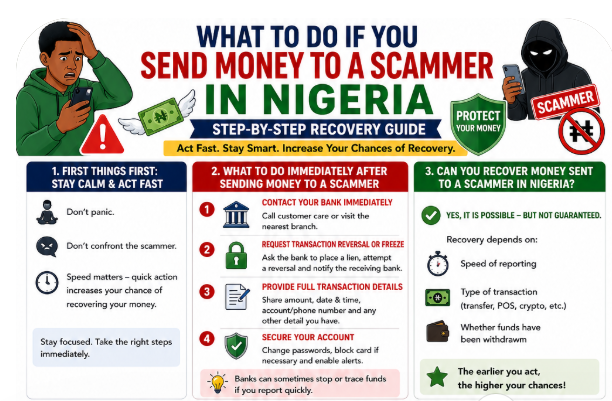
It often starts like a normal transaction. You see a product online, speak with a “seller,” send payment, and then everything goes quiet. Calls stop going through. Messages remain unread. At that moment, panic sets in.
Many Nigerians have faced this exact situation, whether through online shopping, urgent financial requests, or social media deals. The big questions quickly follow:
- What should I do if I send money to a scammer in Nigeria?
- Can I recover my money?
- Where can I report the scam?
The problem is not just the scam itself. It is the lack of clear guidance on what to do next. Some people wait too long. Others do not take the right steps.
This guide explains, in simple terms, how scam recovery in Nigeria works. You will learn the immediate actions to take, how to report fraud, and how to reduce your chances of losing money permanently.
First Things First: Stay Calm and Act Fast
The first reaction after being scammed is usually emotional. Anger, regret, and confusion can take over. That is normal, but your next steps matter more than your feelings.
Speed is critical in any bank scam in Nigeria. The earlier you act, the better your chances of stopping or tracing the transaction.
Also read: How to Verify a Phone Number in Nigeria Before Sending Money
Keep this in mind:
- Do not panic
- Do not argue with the scammer
- Do not delay action
- Focus on recovery immediately
A delay of even a few hours can make a difference, especially if the scammer withdraws the money quickly.
What to Do Immediately After Sending Money to a Scammer in Nigeria
If you are searching for what to do if you send money to a scammer in Nigeria, start here. These steps should be taken without delay.
1. Contact Your Bank Immediately
Call your bank’s customer care or visit the nearest branch. Inform them that you made a fraudulent transfer.
2. Request a Transaction Reversal or Freeze
Ask the bank to:
- Place a lien on the receiving account
- Attempt a reversal
- Notify the receiving bank
3. Provide Full Transaction Details
Be ready with:
- Amount sent
- Date and time
- Account number or phone number used
- Proof of transaction
4. Secure Your Own Account
If you suspect your details were exposed:
- Change your banking passwords
- Block your ATM card if necessary
- Enable transaction alerts
Also read: How to Avoid Getting Scammed on Instagram in Nigeria
Key Insight
Banks can sometimes stop or trace funds, especially if the report is made early. Waiting reduces your chances.
Can You Recover Money Sent to a Scammer in Nigeria?
This is the question most people ask, and the answer is honest but not always comforting.
Yes, you can recover money from a scam in Nigeria, but it is not guaranteed.
What affects recovery:
- Speed of reporting: Immediate reports improve success
- Transaction method: Bank transfers are easier to trace than crypto
- Withdrawal status: If funds are already withdrawn, recovery becomes harder
Important Note
In many cases, partial recovery is possible if action is taken quickly.
How to Report a Scam in Nigeria
Reporting is not just about your case. It also helps reduce online fraud in Nigeria.
Official Channels
You can report scams to:
- Economic and Financial Crimes Commission
- Nigeria Police Force
Steps to Report
- Visit the nearest office or official website
- Submit all evidence
- Fill out a complaint form
- Follow up on your case
Evidence to Provide
- Screenshots of chats
- Payment receipts
- Phone numbers or account details
- Any voice notes or emails
Key Tip
The more detailed your evidence, the stronger your case.
Also read: How to Know a Fake Buyer in Nigeria Before Payment
How Banks Handle Scam Cases in Nigeria
When you report a bank scam in Nigeria, your bank begins an internal process.
What usually happens:
- Transaction review
- Communication with the receiving bank
- Attempt to freeze funds
- Investigation of the recipient account
Important Note
Banks do not promise refunds, but they play a key role in tracking and blocking fraudulent transactions.
Common Mistakes Victims Make After Being Scammed
Many people lose recovery opportunities because of avoidable mistakes.
Common errors include:
- Waiting too long before reporting
- Deleting chats or evidence
- Trusting the scammer again
- Feeling embarrassed to seek help
Key Insight
Silence allows scammers to continue. Reporting helps both you and others.
Real-Life Case Scenarios in Nigeria
Case 1: Late Reporting
A student paid for a laptop through social media. After two days of silence, he reported the case. By then, the funds had been withdrawn. No recovery was possible.
Case 2: Quick Action
Another buyer reported within 30 minutes of sending money. The bank flagged the account, and part of the funds was recovered.
Lesson
Speed makes a real difference in scam recovery in Nigeria.
How to Prevent Future Scams
Avoiding another scam is just as important as recovering from one.
Practical Tips
- Always verify before sending money
- Avoid urgent or pressured transactions
- Use trusted platforms
- Confirm identity through calls or video
Many Nigerian students buying gadgets or paying for services online fall into scams because of haste. A simple verification step could prevent loss.
Government and Legal Support for Scam Victims
Government agencies play an important role in handling fraud cases.
Their roles include:
- Investigating financial crimes
- Tracking scam networks
- Prosecuting offenders
Reporting your case contributes to broader efforts to reduce online fraud in Nigeria.
Digital Tools That Can Help Track or Report Scammers
Technology can support your efforts.
Useful tools:
- Banking apps for transaction history
- Caller ID apps for number identification
- Social media reporting features
Tip
Always keep records of your transactions and conversations. They can serve as key evidence.
Emotional Recovery After Being Scammed
Beyond the financial loss, scams affect confidence.
It is common to feel:
- Embarrassed
- Angry
- Distrustful
What matters is how you respond.
Helpful approach:
- Accept what happened
- Focus on lessons learned
- Apply safer practices going forward
Many people have faced similar situations. You are not alone.
Quick Checklist: What to Do If You Send Money to a Scammer
- Contact your bank immediately ✔
- Request reversal or freeze ✔
- Gather all evidence ✔
- Report to authorities ✔
- Warn others ✔
FAQs: Scam Recovery Nigeria
How can I recover money sent to a scammer in Nigeria?
Act quickly. Contact your bank, request a reversal, and report to authorities with evidence.
Can a bank reverse a scam transaction in Nigeria?
Yes, in some cases. It depends on how fast you report and whether the funds are still in the account.
What should I do immediately after being scammed?
Call your bank, secure your account, and begin reporting the incident.
Where can I report online fraud in Nigeria?
You can report to the Economic and Financial Crimes Commission or the Nigeria Police Force.
How to track a scammer in Nigeria?
Tracking is handled by banks and law enforcement agencies using transaction and identity data.
Is it possible to recover money after 24 hours?
It becomes more difficult, but still worth reporting immediately.
Do banks refund scam victims automatically?
No. Refunds depend on investigation outcomes.
Can I report a scam online in Nigeria?
Yes, many agencies accept online complaints through their official portals.
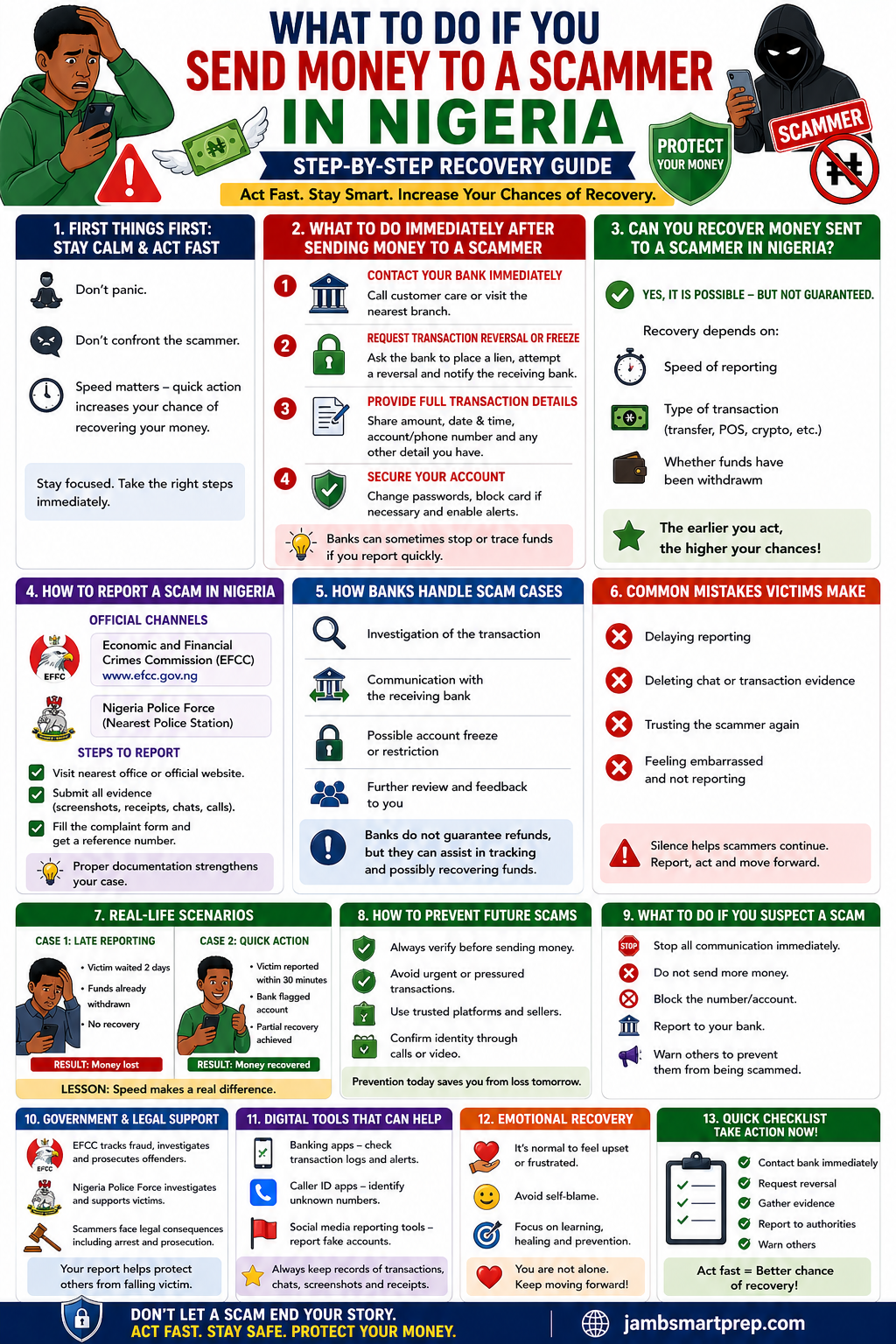
Scam Recovery Guide (Nigeria)
Immediate Actions:
- Contact bank
- Request reversal
- Save evidence
Report To:
- EFCC
- Police
Recovery Tips:
- Act fast
- Provide details
- Follow up
Avoid Next Time:
- Verify before payment
- Avoid urgency
- Use trusted sellers
Golden Rule:
Act fast = Better chance of recovery
Conclusion
Sending money to a scammer can feel overwhelming, but your response matters more than the mistake.
The key point is simple. Acting quickly after a fraudulent transaction gives you a better chance of recovery. Waiting reduces that chance.
Take these steps seriously:
- Save your bank’s contact lines
- Always verify before sending money
- Report scams without delay
If this guide has been helpful, keep it for future reference and share it with others. Many people face online scams in Nigeria daily, and awareness can prevent loss.
Before you go, consider this:
If you were in this situation, what would be the first step you would take immediately?
