
Every day in Nigeria, millions of hardworking people wake up before dawn, battle traffic, and return home late at night, only to find that their salaries can hardly cover bills. The hustle never ends, yet financial freedom seems out of reach.
This is where the idea of making money while you sleep comes in. It simply means creating income streams that continue to bring in money even when you are not actively working. In other words, passive income.
By the end of this guide, you’ll discover proven strategies Nigerians are already using to earn from digital platforms, real estate, and investments—without working 24/7.
What Does “Making Money While You Sleep” Mean?
To understand it, let’s break down two types of income:
-
Active income: Money earned by trading time for work (e.g., salary, daily business). Stop working, and the money stops.
-
Passive income: Money that flows even after the initial work is done (e.g., rent, dividends, online content earnings).
In today’s Nigerian economy—where inflation, job cuts, and the rising cost of living are daily news—passive income is no longer a luxury. It’s survival.
Example: A Nigerian blogger who publishes WAEC or JAMB study tips online. Even while asleep, students searching on Google read the content, click ads, and generate revenue.
10 Reasons Why Nigerians Need Passive Income in 2025/2026
According to the National Bureau of Statistics (NBS), Nigeria’s inflation rate reached 33.4% in 2025, and unemployment among young people is still above 50%. These numbers highlight why Nigerians must look beyond salaries.
Why passive income is crucial:
-
Rising cost of living in Nigeria 2025.
-
Inflation eating up savings.
-
Currency devaluation.
-
High unemployment.
-
Job insecurity.
-
Limited pension and retirement benefits.
-
Medical and family emergencies.
-
Financial independence.
-
Freedom to pursue passion projects.
-
Long-term wealth creation.
13 Proven Ways to Make Money While You Sleep in Nigeria
Here are real methods Nigerians are using:
-
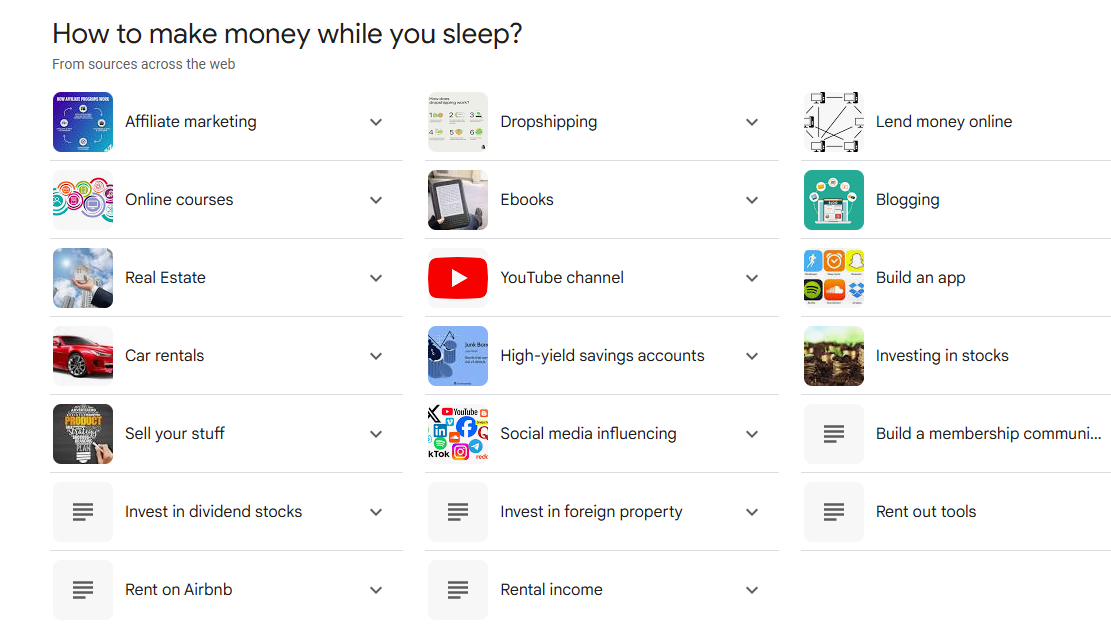
Blogging & Google AdSense – Create a niche blog (WAEC prep, fashion, finance). Monetize with ads.
-
YouTube Monetization – Nigerians love tutorials and entertainment. Channels earn from ads and sponsorships.
-
Affiliate Marketing – Promote products from Jumia, Konga, or Amazon. Earn commissions on sales.
-
Online Courses – Create tutorials on coding, forex, or graphic design.
-
Real Estate Rentals & Airbnb – Short-lets in Lagos and Abuja are booming.
-
Land Banking – Buy land in developing areas, sell later at a higher price.
-
Dividend Stocks – Invest in NSE-listed companies that pay annual dividends.
-
PiggyVest & Cowrywise Interest Earnings – Automated savings that generate interest.
-
Print-on-Demand – Sell T-shirts, mugs, or merch online.
-
Mobile Apps & Fintech – Earn from apps or fintech investments.
-
Royalties – Music, eBooks, photography licensing.
-
Facebook Reels – Earn from Meta’s monetization programs.
6 Low-Cost Passive Income Opportunities for Beginners
Not everyone can start big. Here are small investments that can grow:
-
Ajo/Esusu savings groups.
-
Reselling ebooks or courses.
-
WAEC/JAMB digital past questions.
-
Mini blogging with free platforms.
-
Affiliate links via WhatsApp groups.
-
Small stock or crypto savings.
Example: A student in Ibadan sells past questions PDFs for ₦500 each on WhatsApp. With 200 sales, that’s ₦100,000—without leaving home.
6 Digital Passive Income Opportunities Nigerians Shouldn’t Ignore
-
Blogging (AdSense).
-
YouTube (ads & sponsorships).
-
Affiliate marketing.
-
Mobile app creation.
-
Digital products (guides, templates).
-
Fintech platforms.
How Real Estate Builds Wealth While You Sleep
Real estate is Nigeria’s most trusted wealth builder:
-
Land appreciation: A plot in Lekki that cost ₦10 million in 2001 is now over ₦80 million.
-
Rentals: Hostels near UNILAG or short-lets in Abuja can generate monthly passive cash flow.
-
Crowdfunding: Platforms allow investors to co-own properties with as little as ₦50,000.
10 Challenges of Making Money While You Sleep in Nigeria
-
Scams and Ponzi schemes.
-
Power outages.
-
Unstable internet.
-
Lack of financial literacy.
-
Capital barriers.
-
Policy instability.
-
Delayed payments.
-
Cyber fraud.
-
Inflation risks.
-
Unreliable partners.
Tip: Always research before investing. Check CAC registration and online reviews.
Practical Steps to Start Building Sleep Money in Nigeria
-
Pick one idea that suits your skill.
-
Start small, even with ₦10,000.
-
Test, track, and reinvest.
-
Diversify into 2–3 streams.
-
Stay consistent.
20 Passive Income Ideas You Need To Know
(To make the article rich and evergreen, here’s a wider list)
-
Blogging
-
YouTube
-
Airbnb
-
Land banking
-
Stocks
-
Bonds
-
PiggyVest
-
Affiliate marketing
-
Digital products
-
Online courses
-
Podcasts
-
Mobile apps
-
Print-on-demand
-
Content royalties
-
Real estate crowdfunding
-
Dropshipping
-
E-commerce
-
Micro-lending
-
Music streaming revenue
-
Facebook/Instagram monetization
Real-Life Case Studies
-
YouTube Graduate: A graduate in Enugu makes ₦300,000 monthly from educational content.
-
Student Seller: An undergraduate in Ibadan earns from WAEC/JAMB ebooks.
-
Trader Investor: A trader in Abuja buys plots in Keffi, doubling value in 5 years.
FAQs on Making Money While You Sleep in Nigeria
-
Can I start with ₦5,000? Yes, through ebooks or savings apps.
-
Is blogging still profitable in Nigeria 2025? Yes, niche blogs are thriving.
-
What’s the fastest way to build passive income? Affiliate marketing + digital products.
-
Can students earn passive income? Absolutely, start small online.
-
How do I avoid scams? Verify platforms, avoid promises of huge returns.
Conclusion: Your Journey to Financial Freedom
Making money while you sleep is possible in Nigeria, but it requires planning, patience, and consistency. Whether through real estate, blogging, or fintech platforms, the key is to start small, stay focused, and expand gradually.
Financial freedom doesn’t come overnight, but if you begin today, you’ll thank yourself in five years.
Subscribe to this blog for more guides on passive income, scholarships, and education opportunities.
