Every morning, millions of Nigerians join the rush-hour struggle: hours in traffic, stressful 9–5 jobs, and bills that never stop coming. By month-end, many realize their salary has disappeared into rent, transport, food, and school fees. This cycle of working endlessly without building lasting wealth is what people call the rat race.
In the Nigerian context, the rat race is even tougher due to high inflation, unstable currency, and unemployment. But the good news is, you can break free.
By the end of this guide, you’ll learn 10 proven strategies that Nigerians are already using to escape the rat race and build financial freedom.
What is the Rat Race and Why You Must Escape It
The rat race is a lifestyle where you work hard daily, but your income only covers bills. There is little to no room for savings, investments, or personal growth.
In Nigeria, this often looks like:
-
A bank worker earning ₦200,000 monthly but spending ₦180,000 on rent, feeding, and transport.
-
A young graduate juggling two jobs yet unable to afford land or meaningful savings.
Remaining in the rat race means living paycheck to paycheck. Escaping it means having multiple income streams, financial control, and assets that work for you.
The Nigerian Reality: Salary vs Cost of Living
The numbers speak for themselves:
-
-
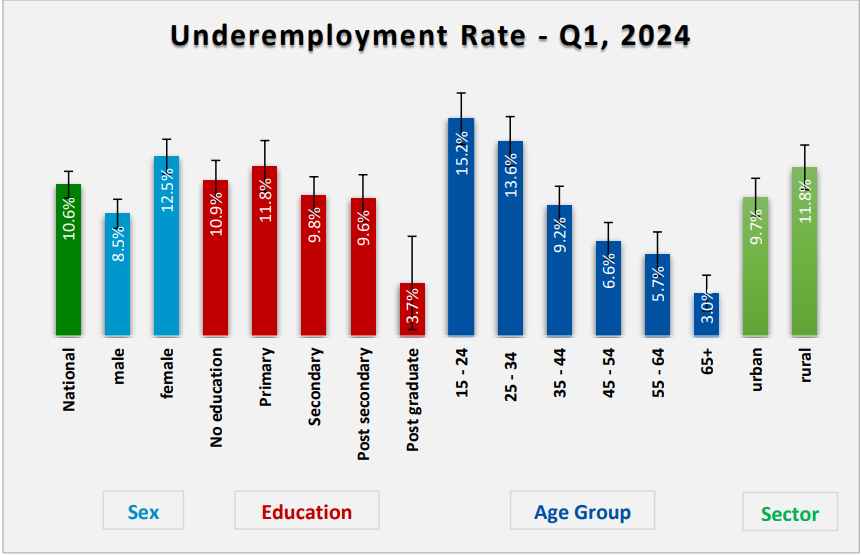
According to the National Bureau of Statistics (NBS, 2024), youth unemployment and underemployment stand at over 10.2% in Q1.
-
-
Inflation reached 32.70% in September 2024, with food inflation even higher.
-
Rent in cities like Lagos and Abuja has doubled in the past five years.
SOURCE: NLFS
This shows why depending on one salary is no longer enough. Nigerians need multiple income streams to survive, not to talk of building wealth.
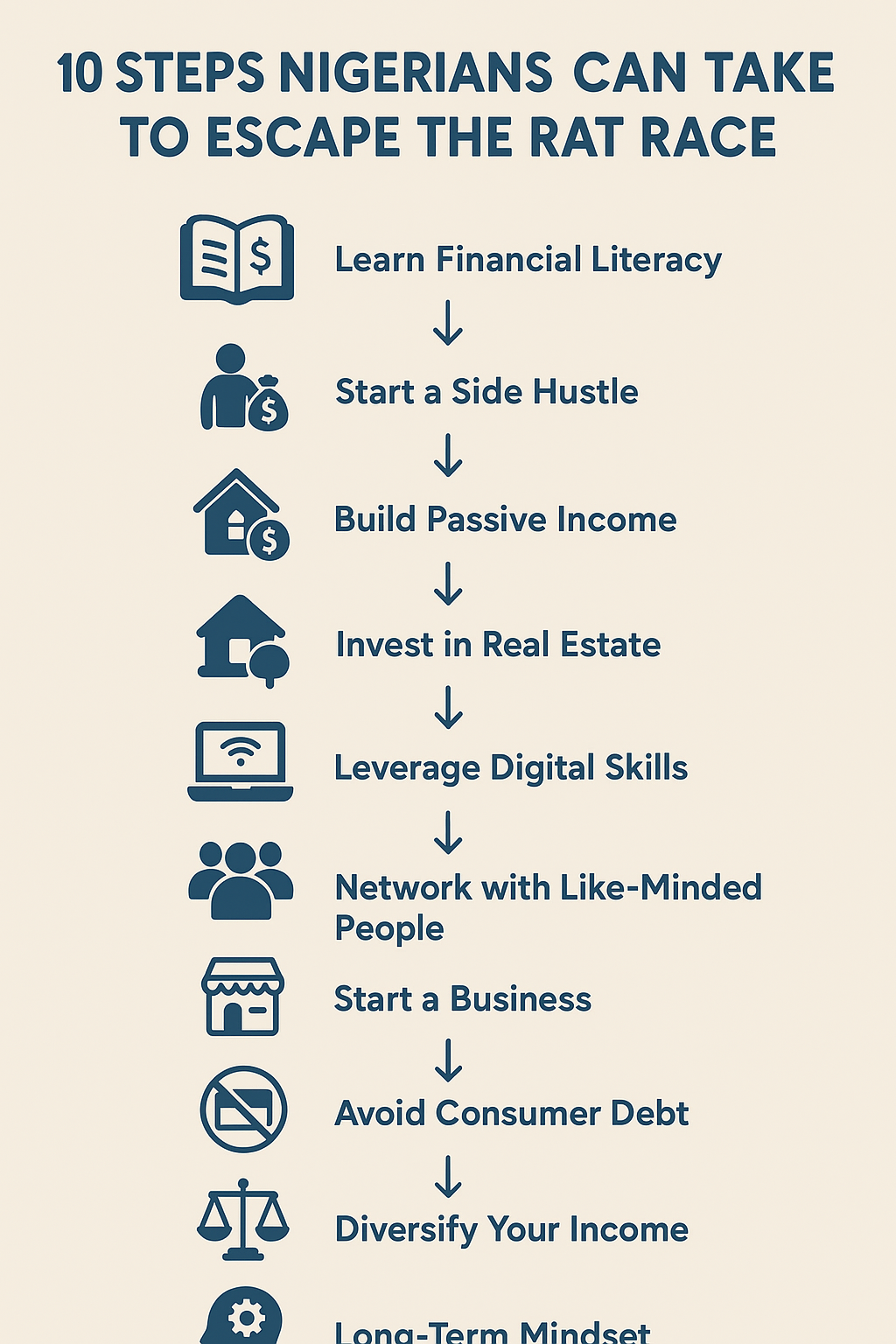
10 Excellent Tips to Escape the Rat Race in Nigeria
1. Learn Financial Literacy
Before making more money, you must learn how to manage it. Financial literacy means budgeting, debt control, and investing wisely.
-
Apps like PiggyVest, Cowrywise, and Kuda Bank help Nigerians save and invest automatically.
-
Learning compound interest can help you grow even small savings.
2. Start a Side Hustle
A side hustle is often the first step out of the rat race.
Popular Nigerian options include:
-
Mini importation (buying goods from China and selling in Nigeria).
-
Freelance writing or graphic design.
-
Baking and catering for events.
-
Motorcycle or dispatch logistics.
Example: A Lagos youth earns ₦150,000 monthly from her teaching job but makes another ₦100,000 selling thrift clothes online.
Also read: How to Build Passive Income in Nigeria – Low-Cost Passive Income Opportunities for Beginners
3. Build Passive Income Streams
Passive income means money that flows in even when you’re not actively working.
Examples:
-
Real estate rentals (student hostels in Ibadan, short-let apartments in Abuja).
-
Dividend-paying stocks on the Nigerian Exchange.
-
Digital products like e-books, online courses, or YouTube channels.
4. Invest in Real Estate and Land Banking
Land in Nigeria rarely depreciates. Buying and holding (“land banking”) is one of the safest ways to build wealth.
-
A plot bought for ₦500,000 in Ogun State in 2016 can now sell for ₦5 million+.
-
Short-let apartments in Lagos (Airbnb) earn investors up to ₦400,000 monthly.
5. Leverage Digital Skills
Global demand for digital skills is rising. Nigerians can earn in dollars while living locally.
High-demand skills include:
-
Coding and web development.
-
Graphic design and UI/UX.
-
Social media marketing.
-
Data analysis.
Example: A university student in Enugu earns $1,000 monthly as a freelance video editor on Upwork.
6. Network with Like-Minded People
Your network is your net worth. Surrounding yourself with ambitious people helps you grow.
-
Join LinkedIn groups, tech hubs, or WhatsApp business communities.
-
Find mentors who’ve built financial freedom.
7. Start a Business (Even Small)
Not every Nigerian can start a large business, but even a small one helps.
Ideas include:
-
Food vending near schools or offices.
-
Poultry or fish farming.
-
Dropshipping (selling online without holding stock).
8. Avoid Consumer Debt
Many Nigerians fall into the trap of buying luxury items on credit: iPhones, designer clothes, or cars.
-
Smart debt (for business or education) can help.
-
Consumer debt keeps you in the rat race.
9. Diversify Your Income
Never rely on one source of money.
Example:
-
Salary (₦150,000) + Blogging (₦50,000) + Airbnb (₦100,000) = ₦300,000 monthly.
Diversification reduces risk and increases security.
10. Long-Term Mindset and Consistency
Escaping the rat race is not overnight. It requires:
-
Patience to grow investments.
-
Discipline to save consistently.
-
Continuous learning to stay relevant.
10 Common Mistakes Nigerians Make While Trying to Escape the Rat Race
-
Falling for Ponzi schemes (MMM, Loom, fake crypto promises).
-
Spending too much on “owambe” parties.
-
Buying liabilities instead of assets.
-
Chasing quick money instead of building steadily.
-
Ignoring personal development.
-
Mixing business with poor record-keeping.
-
Depending on friends and family for capital.
-
Copying others blindly without research.
-
Quitting too early when profits are slow.
-
Not avoiding scams Nigeria is known for.
7 Case Studies: Nigerians Who Escaped the Rat Race
-
Chidinma (Graduate, YouTube): Started a channel on makeup tutorials in 2019. Now earns ₦500,000+ monthly from ads and brand deals.
-
Mr. Ade (Teacher, Poultry Farming): Invested ₦100k in chickens. Three years later, he runs a business supplying eggs to supermarkets.
-
Olawale (Engineer, Online Store): Began selling phone accessories with ₦120k. Today, his e-commerce shop generates ₦3m yearly.
-
Blessing (Single Mother, Freelance Writing): Earns in dollars writing blog posts for US clients, funding her children’s education.
-
Samuel (Tech Professional): Took online courses in coding, got a remote job with a Canadian company, and tripled his income.
-
Amina (Farmer, Land Banking): Bought land in Kaduna in 2018. In 2025, the value rose tenfold.
-
Ifeanyi (Student, Graphics Design): Earned money designing flyers, funded his university fees, and later built a design agency.
20 FAQs on Escaping the Rat Race in Nigeria
-
Can I escape the rat race with a small salary?
Yes, but you’ll need strict budgeting and a side hustle. -
What are the best side hustles for Nigerians in 2025/2026?
Mini importation, freelance writing, YouTube, and logistics remain popular. -
Is passive income real in Nigeria?
Yes. Real estate, stocks, and digital products prove it works. -
How long does it take to escape the rat race?
It depends on your income, savings, and discipline, but typically 5–10 years. -
What is the first step to financial freedom?
Learning financial literacy. -
Can students escape the rat race?
Yes, by learning digital skills and building side hustles early. -
Are Ponzi schemes a good way out?
No, they collapse and cause losses. -
What apps help Nigerians save?
PiggyVest, Cowrywise, Bamboo, Trove. -
Is land banking profitable?
Yes, especially in developing cities. -
What are the risks in side hustles?
Poor planning, scams, and lack of consistency. -
Can salary earners truly escape the rat race?
Yes, if they invest and diversify their income. -
Is freelancing reliable in Nigeria?
Yes, especially with global platforms. -
What are examples of passive income?
Stocks, real estate, e-books, YouTube ads. -
What mistakes should I avoid?
Overspending, scams, and quick money traps. -
Can women escape the rat race in Nigeria?
Absolutely, many female entrepreneurs are leading the way. -
What is the role of mindset?
A growth mindset is essential. -
Can farming help escape the rat race?
Yes, agribusiness is still lucrative. -
Is it too late to escape the rat race in your 40s?
No, many Nigerians start late and succeed. -
Do I need millions to start?
No, start small and scale gradually. -
How do I know I’ve escaped the rat race?
When your assets and passive income cover your lifestyle without relying on salary.
Conclusion: Start Today, Escape Tomorrow
Escaping the rat race in Nigeria may feel overwhelming, but it is achievable with the right steps. By learning financial literacy, starting side hustles, investing in passive income, and avoiding common mistakes, you can gradually build financial freedom.
The journey is long, but consistency and discipline make it possible. Don’t wait until things get worse. Start today with the little you have.
Subscribe to our blog for more guides on business, scholarships, and financial freedom in Nigeria.
